


Automotive & Manufacturing





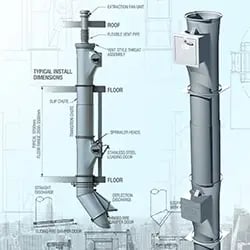
Chute systems are essential infrastructure in multi-storey buildings, yet they are often treated as a standard specification added late in design. When poorly planned, it can lead to increased maintenance and operational costs, odour complaints, blockages, and operational downtime.
Based on over 30 years of designing, installing, and servicing chute systems across Australia, it’s clear that the difference between a system that performs and one that becomes a liability is not the brand or material alone—it’s the decisions made at the design stage.

Planning for Future Waste Streams
Waste requirements are evolving rapidly. In NSW, the EPA Food Waste Segregation mandate, effective 2030, will require buildings to separate organic waste at source. Buildings that do not incorporate segregation of food waste may face costly retrofits.
The challenge isn’t just compliance—it’s operational efficiency. Buildings need to accommodate multiple waste streams, waste chute systems must be integrated thoughtfully, and waste strategies must allow for smooth collection logistics. Ignoring these factors early often leads to retrofits that disrupt building operations and add significant cost.
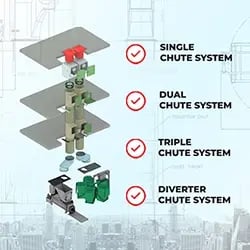
Some projects incorporate triple diverter systems, allowing general, recyclable, and organic waste to be handled within a single shaft. While space-efficient, these advanced recycling chute systems require precise engineering and planning to function reliably.
Optimising Layouts for Operational Performance
Chute layout is more than a construction decision—it directly affects user compliance, collection efficiency, and maintenance requirements.
Single chutes are simple to install but may require multiple bins at discharge points, increasing manual handling. Dual chutes improve separation between general and recyclable waste, reducing sorting effort later. Triple diverter systems, though technically more complex, consolidate three streams efficiently.
Hybrid layouts are sometimes necessary where waste room space is constrained, blending dedicated and diverted streams. Choosing the right chute system design is a delicate balance between capital cost, operational efficiency, and long-term flexibility.
Real-world experience shows that over-engineered layouts consume valuable shaft space without proportionate benefit, while under-engineered layouts create bottlenecks that increase servicing frequency and occupant frustration.
Managing High-Wear Points
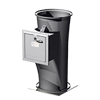
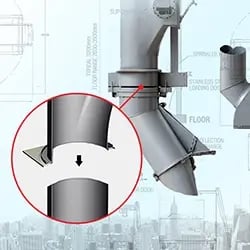
Elbows and discharge points are the sections of a chute system under the most stress. Without proper reinforcement, these areas quickly become failure points and sources of odour.
Impact plates (PODs) at elbow bends and discharge points significantly improve durability. Material choice also plays a crucial role: plastic chutes are lightweight, corrosion-resistant, and self-cleaning, while steel chutes are non-combustible but require heavier installation equipment and careful alignment.
Precision engineering is essential. A poorly aligned bend or elbow can cause blockages, excessive noise, and accelerated wear, even in otherwise well-designed systems. Careful attention to elbow alignment and the installation of impact plates at critical points are important design considerations for improving system reliability and minimising maintenance issues over the life of the chute.
Serviceability and Post-Handover Support
A system can be perfectly compliant yet still fail in operation if it’s difficult to operate or maintain. Considerations such as ease of operation, safe access for inspections, easily replaceable components, and responsive post-sales support are critical.
Even small design oversights, like inaccessible impact plates or poorly positioned discharge doors, can escalate into major operational issues once the building is occupied. Engaging a supplier who understands both the technical and operational requirements ensures the system remains reliable over decades.
Early Specialist Input Makes the Difference
Chute systems sit at the intersection of many modalities such as architecture, mechanical and civil engineering, waste management, traffic management, and compliance. Early engagement with specialists ensures effective and efficient design resulting in robust, future-proofed systems.
Projects that integrate consultation from the concept stage experience fewer design changes, smoother construction, and significantly reduced operational risk post-occupancy. Conversely, systems designed without specialist input often require retrofits, result in service interruptions, and increase lifecycle costs.
Conclusion
High-performing chute systems do not happen by accident. They are the result of deliberate planning, engineering expertise, and ongoing support. Developers, architects, and facilities teams that prioritise early consultation and technical insight can avoid operational pitfalls and future‑proof their buildings’ waste management infrastructure.
Contact our team to discuss your project, optimise chute design, and ensure long-term operational efficiency.