


Automotive & Manufacturing





Garbage chute maintenance is the regular inspection, servicing and repair of the components that make up a waste chute system — from loading doors on every floor through to the discharge area at the base of the building.
Garbage chute systems are a central part of waste management in high-rise residential buildings, commercial properties, hospitals, hotels and other multi-level developments. A properly designed and maintained chute provides an efficient way to move waste from individual floors to a central collection area. A poorly maintained one can disrupt that process across every floor it serves.
For building owners, facility managers, strata managers, developers and property operators, garbage chute maintenance should form part of the property’s broader preventative maintenance program. Regular inspection and servicing helps identify wear, damage and operational issues before they develop into more significant problems.
In Australia, the terms garbage chute and rubbish chute refer to the same equipment. Everything in this guide applies to both.
Wastech Engineering designs, manufactures and supports waste chute systems for high-rise and multi-level buildings, including systems for garbage, recycling, linen and organics. For an overview of the different configurations available, see Wastech’s What Is a Chute System? guide.
This complete garbage chute maintenance guide explains the key considerations for maintaining a chute system, including inspection, cleaning and hygiene, blockages, repairs, occupant instructions and preventative servicing.
What Is Garbage Chute Maintenance?
Garbage chute maintenance involves the inspection, servicing and repair of the components that make up a waste chute system.
The exact maintenance requirements depend on the chute’s design, construction, configuration and operating environment. A maintenance program can involve inspection of loading doors, chute sections, throat areas, discharge components and associated safety equipment. Operational testing and preventative servicing may also form part of the maintenance process.
Wastech’s Waste Equipment Servicing & Maintenance guide lists the specific checks included in its chute service cycle — loading door operation, throat section damage, discharge deflector cleanliness, and the discharge fire door and its fusible link — on a six-monthly schedule.
Maintenance should be approached as a complete system rather than focusing solely on the visible vertical section of the chute.
For further information about how chute systems are designed and configured, Wastech’s What Is a Chute System? guide provides additional technical context.
Why Is Garbage Chute Maintenance Important?
Garbage chute systems operate regularly and are exposed to the waste materials placed into them. Over time, components can experience wear, damage or contamination.
A planned garbage chute maintenance program provides an opportunity to identify issues before they become larger operational problems. Regular servicing also gives building managers a clearer picture of equipment condition and whether preventative repairs or further technical investigation are required.
There is also a legal dimension. Under Australia’s model Work Health and Safety laws, a person conducting a business or undertaking that manages or controls plant — which includes waste handling equipment — has a duty to ensure that plant is properly maintained, inspected and, where necessary, tested by a competent person. Safe Work Australia’s Model Code of Practice: Managing Risks of Plant in the Workplace (safeworkaustralia.gov.au) outlines these obligations in detail.
For high-use buildings, this is particularly important. A chute problem can affect waste disposal across multiple floors, potentially disrupting residents, tenants, building staff and waste contractors.
Preventative maintenance can help reduce reliance on emergency repairs by identifying developing issues during scheduled servicing. Wastech’s Waste Equipment Servicing & Maintenance guide explains how servicing frequency is determined by equipment usage, material volumes, operating conditions and site environment, rather than a single interval applied to every application.
How Often Should a Garbage Chute Be Maintained?
There is no single maintenance interval that applies to every garbage chute system.
The appropriate frequency depends on factors such as the building’s size, waste volumes, type of waste, frequency of use, chute design, operating conditions, equipment condition and manufacturer recommendations.
Wastech’s scheduled servicing can be arranged at 1, 3, 6 or 12-month intervals depending on equipment usage, material volumes and operating requirements, with its chute-specific maintenance checks run on a six-monthly cycle.
A maintenance schedule should be developed around the actual equipment and site conditions rather than applying the same frequency to every building.
Garbage Chute Maintenance Checklist
A comprehensive maintenance program should consider the entire chute system, including the loading points, vertical chute, discharge area and associated equipment.
-
Chute Loading Doors
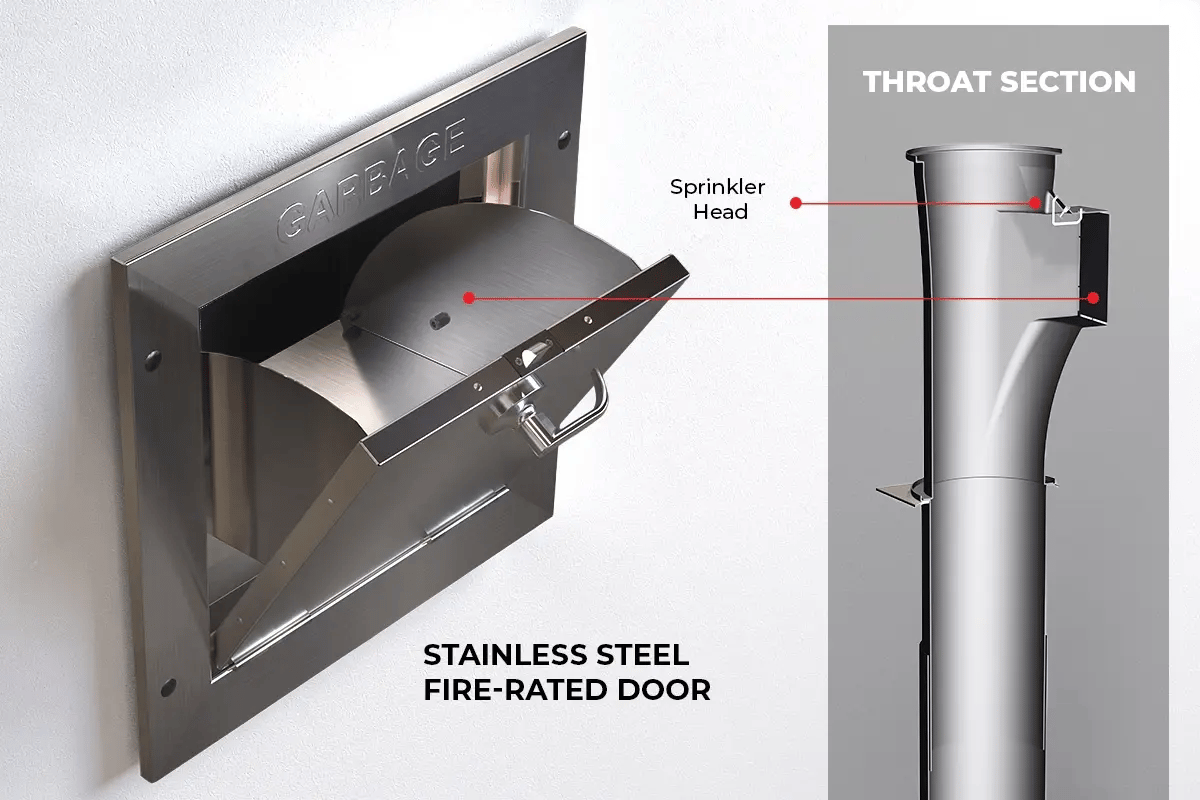
Loading doors are among the most frequently used components of a chute system. They should be checked for damage, wear, difficult operation and other visible defects.
A door that does not operate or close correctly should be investigated before the issue develops into a larger fault.
For systems incorporating fire-rated loading doors, safety features should be maintained in accordance with the system design and applicable requirements. Wastech’s Smoothtubes loading throats are moulded to include a fire block core, with the door frame sealed to the wall using fire sealant, and fire sprinklers installed in every loading throat ready for connection to fire services. These design features align with the fire safety requirements for waste chutes in Class 2 and Class 3 buildings under the National Construction Code (ncc.abcb.gov.au). Loading door condition and operation is included in Wastech’s six-monthly chute service checks.
-
Chute and Throat Sections
The chute and throat sections should be inspected for visible damage, corrosion, wear, obstructions or other conditions that could affect operation. Throat-section damage is specifically included in Wastech’s six-monthly chute maintenance checks.
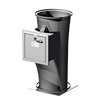
Wastech’s Smoothtubes™ Plastic Chutes use an industrial-grade LLDPE (linear low-density polyethylene) construction with a smooth, closed-cell, non-porous internal surface designed to resist residue, odour, bacteria, liquid, corrosion and blockages. The throat sections on Smoothtubes are moulded within the loading door frame rather than fitted as a separate bolted component, which eliminates a common joint failure point found in other chute types. Damage is still possible and should be investigated on inspection.
Maintenance requirements should be considered according to the specific chute system installed, not assumed to be the same for every building.
-
Discharge Area
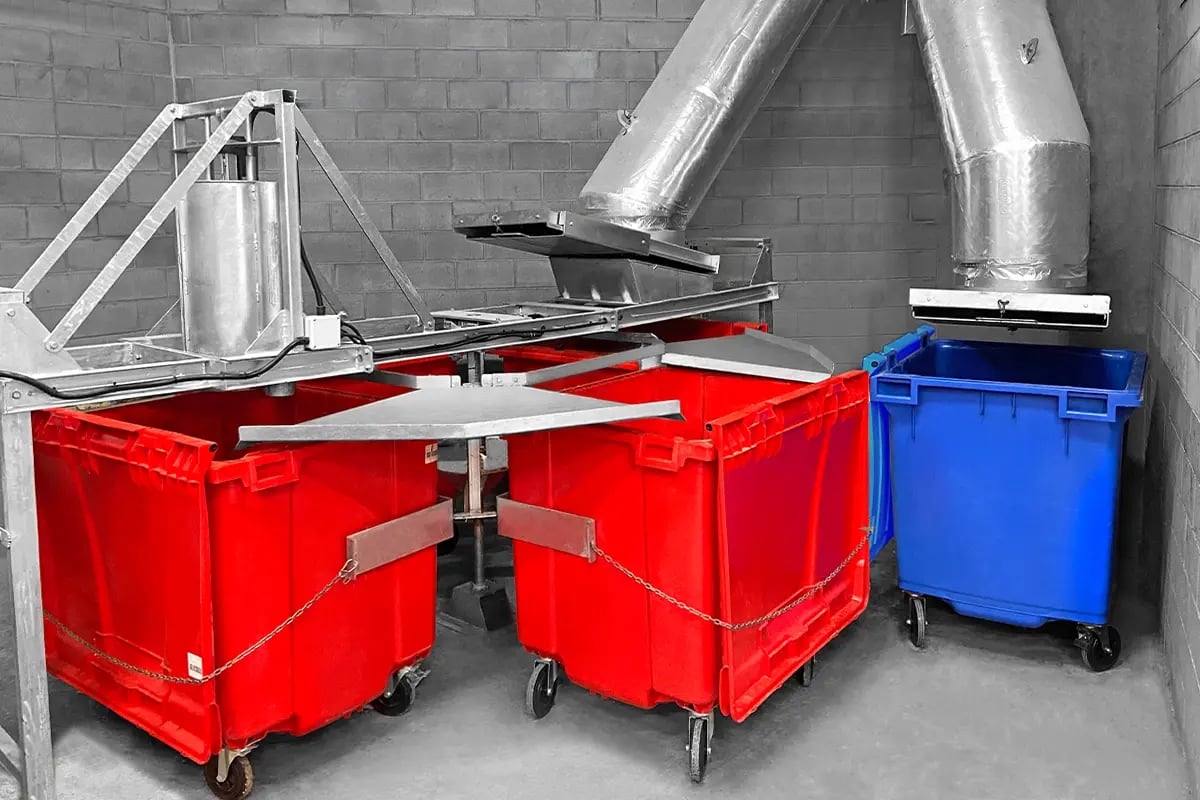
The discharge area is where the chute meets the collection process, and its condition affects the entire waste-handling system.
Where a Wastech Smoothtubes chute discharges into a bin, the galvanised steel deflector is set at a minimum 45-degree angle and fitted with a fire-activated fusible link close-off door. The fusible link is a fire safety component that closes automatically when heat activates it, blocking the chute in the event of fire. That door should be kept clear of waste accumulation so it can close freely. The Smoothtubes LLDPE construction has been fire-hazard property tested in accordance with Australian Standard AS1530.4-2014 and BCA Clause C1.10, which governs fire resistance requirements for materials used in building construction.
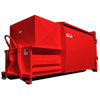
Where the chute feeds directly into an EcoPack compactor, the compactor isolates the chute at all times, so a separate fire door is not required at the discharge point — but the interface between the chute outlet and the compactor inlet should still be inspected as part of the overall system check.
The deflector and fire door are included in Wastech’s six-monthly chute service checks, alongside loading door operation and throat section condition.
-
Ventilation
Ventilation can form part of a chute system’s design. Wastech’s Smoothtubes™ technical specifications include a 200mm diameter galvanised steel ventilation fan and discharge cowl assembly. A working fan reduces odour migration from the chute into loading areas on each floor.
Ventilation requirements are system-specific. Inspection and servicing should follow the relevant system design and manufacturer’s requirements.
Garbage Chute Cleaning and Hygiene
Cleaning is part of maintenance, but it addresses a different problem than mechanical inspection. Inspection identifies wear and component failure. Cleaning removes accumulated waste residue that causes odour, bacteria growth and — in severe cases — hygiene conditions that affect the building’s occupants.
-
Why Cleaning Matters
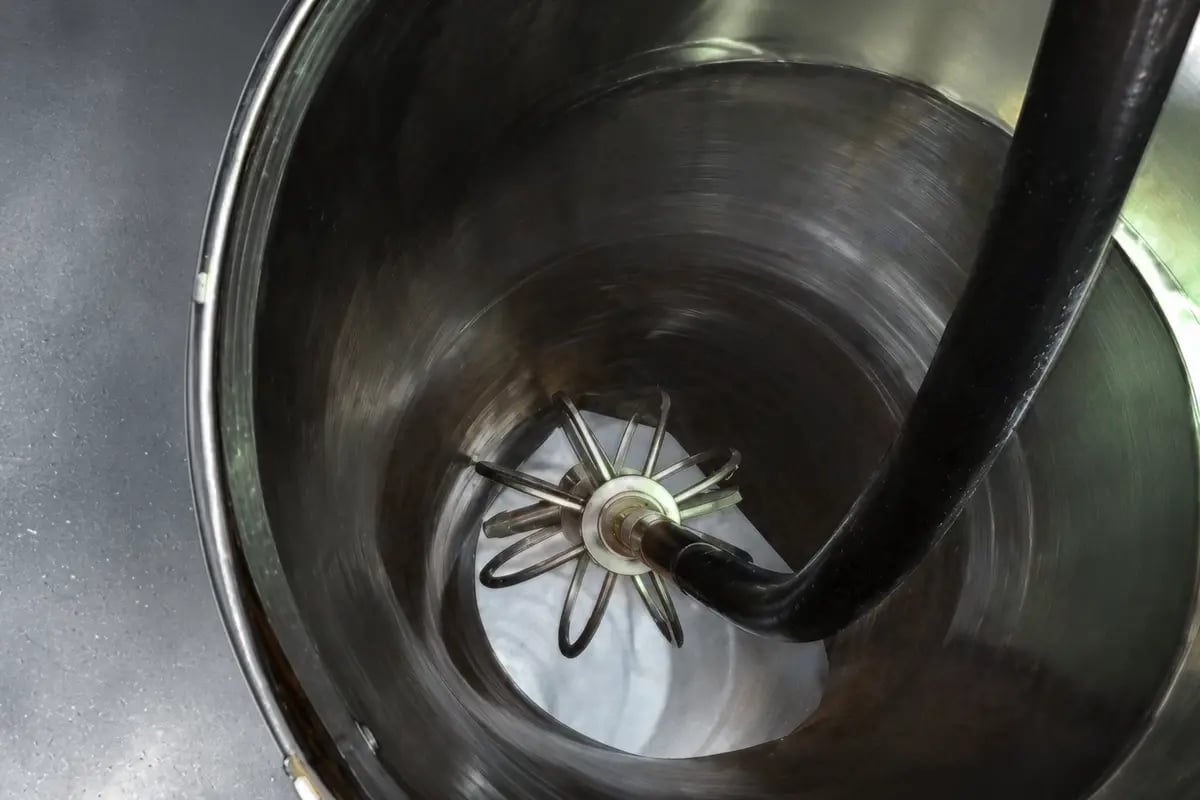
A garbage chute handles organic waste, food scraps, liquids and decomposing material on every drop. Over time, this material coats internal surfaces, particularly in chutes with rough or porous construction. Once residue builds up:
- Odours carry from the chute into loading areas and residential corridors.
- Bacteria and moisture accumulate on internal surfaces.
- Residue creates conditions for pest and rodent activity.
- Blockages become more likely as waste catches on coated or degraded surfaces.
In high-rise residential buildings, hygiene complaints from residents are often the first sign that a chute has not been cleaned in line with its actual usage level.
-
How Chute Construction Affects Cleaning Requirements
Not every chute needs the same cleaning frequency or approach. The construction material makes a significant difference.
Wastech’s Smoothtubes plastic chutes use an industrial-grade LLDPE construction with a closed-cell, non-porous internal surface designed to repel waste residue, bacteria, odour and liquid. Wastech describes the Smoothtubes surface as self-cleaning because waste moves through without adhering the way it does on steel or cement. The smooth joins between sections also eliminate the crevices where food particles typically collect and breed bacteria in other chute types.
Steel and cement chutes are more likely to require regular cleaning because their surfaces hold residue and moisture. The appropriate cleaning frequency and method should always reflect the installed system — not a default schedule applied to every building.
For linen chutes — used in hotels, hospitals and aged-care facilities — the soiling profile differs from a waste chute. Body fluids and laundry residue behave differently to food waste. Wastech’s Smoothtubes system supports linen chute configurations, and the same non-porous construction applies. Cleaning requirements should still be assessed for the specific materials being handled.
-
How Often Should a Garbage Chute Be Cleaned?
For most moderate-use residential buildings, garbage chute cleaning should occur at least twice a year. The right interval depends on the chute’s construction, the volume and type of waste being handled, the number of floors served and the operating environment.
High-occupancy towers with heavy daily use need more frequent attention than lower-use commercial buildings. Where odour complaints are recurring or hygiene issues have been identified, cleaning frequency should be increased rather than maintained at an interval set when the building was first occupied.
For buildings with Wastech Smoothtubes, the self-cleaning surface design reduces residue accumulation compared with steel or cement alternatives. For other systems, twice a year is a common starting point, with adjustments based on actual building usage.
-
What Does Garbage Chute Cleaning Involve?
A cleaning visit typically addresses:
- Removal of waste residue from internal surfaces, particularly at joints and at the throat section where waste enters the vertical drop.
- Treatment or flushing of the discharge area.
- Odour treatment where required.
- Cleaning of loading door frames and any areas where residue has accumulated at floor-level access points.
Specialist cleaning visits require an active water supply and drainage in the discharge room. Building managers should confirm these are in place before scheduling a cleaning service.
Where a chute connects to a compactor, the discharge interface and collection equipment should be included in the cleaning scope rather than treated as a separate task.
-
What Garbage Chute Cleaning Equipment Is Required?
The appropriate equipment depends on the chute’s construction, internal dimensions and the nature of any build-up. Equipment and chemicals used on a steel chute may not be appropriate for a plastic chute — method and chemical compatibility both need to be checked against the manufacturer’s specifications.
Using equipment simply because it is marketed for chute cleaning does not make it suitable for every system. For Smoothtubes, the smooth internal surface and specific joint design affect how the system should be cleaned and which chemicals are compatible.
-
Professional Garbage Chute Cleaning Services: What to Look For
Building staff can conduct routine visual checks and report problems, but specialist cleaning — particularly for multi-level chutes — requires trained personnel and appropriate equipment.
When assessing garbage chute cleaning services or engaging garbage chute cleaning companies, the questions to ask are:
- Does the provider understand the specific chute system installed, including its construction and the manufacturer’s cleaning requirements?
- Can they identify maintenance issues during a cleaning visit, or will they only address surface residue and miss developing faults?
- Do they have experience with the discharge equipment — compactor, bin carousel or direct discharge — connected to the chute?
A cleaning visit and a maintenance inspection are different services. For buildings with recurring hygiene complaints, blockages or operational faults, a provider that can assess both during a single visit is more useful than one that only cleans.
Wastech provides servicing, cleaning support, onsite repairs and breakdown support for chute systems across Australia as part of its broader waste equipment service offering.
Garbage Chute Unblocking
Garbage chute unblocking should be approached carefully. Forcing material through a blocked system can cause further problems.
Blockages can occur when inappropriate or oversized materials are placed into the chute. They may also result from waste accumulating within the system or objects becoming lodged in the chute. Oversized items — bundled cardboard, loose bags that split inside the chute, or objects that exceed the opening dimensions — are among the most common causes.
When a blockage occurs, building staff should follow the property’s established garbage chute instructions and avoid unsafe interventions. Where the blockage cannot be safely resolved through normal procedures, technical assistance may be required.
Recurring blockages should be investigated rather than repeatedly treated as isolated incidents. Wastech’s Designing Chute Systems That Perform discusses how chute design decisions influence maintenance requirements, blockages, odour complaints and operational performance.
Garbage Chute Repair: When Is It Required?
Garbage chute repair may be required when inspection identifies damaged, worn or malfunctioning components.
Warning signs include loading doors that do not operate correctly, damaged chute sections, corrosion, damaged seals, discharge-area faults, repeated blockages or other abnormal operation.
The repair method depends on the equipment and the nature of the fault. A technical inspection should be undertaken before determining what repair is required. Wastech provides servicing and repair support for waste chute systems and other waste-management equipment across Australia.
Common Garbage Chute Repair Requirements
Depending on the system, repair requirements may involve loading doors, chute or throat sections, seals, discharge components, fire doors, associated equipment or other system-specific components. The repair should be based on the condition of the installed equipment rather than a standardised approach.
Where the chute forms part of a larger waste-handling system, associated equipment should also be considered. Wastech’s chute range includes the S-250 Chute Compactor and EcoPack Chute Compactor, designed to manage waste at the chute discharge point.
For buildings considering a new or upgraded system, chute layout and configuration decisions — single, dual, triple or diverter — affect long-term maintenance requirements from the outset.
Garbage Chute Instructions and Rules for Occupants
Preventative maintenance begins with appropriate use.
Building managers should provide clear garbage chute instructions to residents, tenants, staff and other users. These instructions should explain what can and cannot be placed through the chute and what users should do when they identify a blockage, damaged door or other problem.
Clear garbage chute rules can help reduce inappropriate use and avoidable operational issues. Depending on the building and chute configuration, rules may address prohibited materials, oversized waste, appropriate waste bags, reporting procedures and building-specific waste separation requirements.
The exact rules should reflect the property’s waste-management procedures and the requirements of the installed chute system.
A Practical Garbage Chute Maintenance Schedule
A preventative program combines routine monitoring with scheduled technical servicing.
Routine building checks can identify obvious issues such as damaged loading doors, visible blockages or abnormal operation. These observations should be recorded and escalated where technical assessment is required.
Scheduled servicing provides a more detailed assessment of the chute system, which — depending on the equipment and operating conditions — may include inspection of loading doors, chute and throat sections, discharge components, safety features and overall operation.
Wastech’s servicing programs can be scheduled at 1, 3, 6 or 12-month intervals depending on equipment usage, material volumes and operating requirements.
Reactive maintenance remains important where a blockage, equipment fault or damaged component requires immediate attention. A preventative approach reduces reliance on reactive repairs by identifying developing issues earlier.
Common Garbage Chute Maintenance Problems
Unplanned equipment downtime costs the typical Australian industrial business around $349,000 AUD per hour, according to a 2023 ABB survey of more than 3,200 plant maintenance decision-makers. Identifying faults during scheduled servicing is consistently less expensive than emergency repairs after a system fails. The problems below are the most common causes of unplanned chute downtime in Australian buildings.
- Blockages — Oversized materials, incorrect waste and foreign objects are the most common causes. Recurring blockages should be investigated to determine whether the issue relates to user behaviour, waste type, equipment condition or an underlying design factor.
- Damaged loading doors — Loading doors are regularly used components. Faulty or damaged doors should be assessed and repaired promptly rather than left to develop into a safety or operational issue.
- Chute section damage — Damage to chute or throat sections should be identified during inspection and assessed to determine whether repair or further technical investigation is required.
- Discharge area issues — The discharge area should be inspected for cleanliness, damage and correct operation of relevant components. Problems here affect the overall waste-handling process and can create hygiene and fire safety concerns.
- Wear and corrosion — Components should be monitored for signs of wear, corrosion or damage. Identifying these issues during scheduled maintenance allows building managers to plan corrective work before a fault develops.
- Recurring operational faults — Recurring faults mean something is wrong with the system, not just bad luck. Repeated problems should be assessed to identify the underlying cause rather than treated as isolated incidents each time they occur.
These are consistent with the specific checks in Wastech’s six-monthly chute service cycle: loading-door operation, throat-section damage, discharge-deflector cleanliness and discharge fire-door components.
How Can Building Managers Reduce Chute Maintenance Problems?
A preventative approach starts with correct use, appropriate cleaning and timely maintenance.
Building managers should provide clear garbage chute instructions, communicate appropriate garbage chute rules and ensure users understand how to report problems.
Regular inspection and servicing should be supported by accurate maintenance records, which can help identify recurring faults, establish maintenance trends and support future planning. Documented service records also provide evidence of compliance with fire safety maintenance obligations, which is relevant in the event of an insurance claim or building inspection.
Where a building experiences persistent blockages, damaged components or other recurring problems, engaging a technical specialist can help determine whether the issue relates to the chute itself, its use or associated waste-management equipment.
For buildings at the design or development stage, considering maintenance requirements early reduces future operational issues. Wastech’s Designing Chute Systems That Perform explores how design decisions influence long-term chute performance and maintenance.
Build Garbage Chute Maintenance Into Your Facility Management Plan
A garbage chute is an important part of a multi-level building’s waste-management infrastructure. Treating maintenance as a planned activity rather than relying on reactive repairs gives building managers a more reliable operation and a clearer basis for budgeting and scheduling.
A practical approach combines inspection, cleaning where required, servicing, repair, monitoring and preventative maintenance. The exact approach should take into account the chute design, materials, operating environment, manufacturer requirements and the way the system is used.
The objective is not simply to respond when a chute becomes blocked or damaged. A structured garbage chute maintenance program identifies issues earlier and reduces the likelihood of disruption across multiple floors at once.
Work With Wastech Engineering for Garbage Chute Maintenance
Maintaining a chute system requires an understanding of the equipment, its operating environment and the way the system is designed to function.
Wastech Engineering has more than 30 years of experience designing, developing and delivering waste-management equipment, supported by technical service capability across Australia. Wastech pioneered the design of Australia’s first plastic chute system with Smoothtubes and has since delivered and installed over 2,000 waste chute projects across Australia. Wastech’s technicians can service and repair waste chute systems, with planned maintenance programs designed around equipment usage, material volumes and operating conditions.
Wastech’s chute range includes Smoothtubes plastic chutes for garbage, recycling, linen and organics — offering 80% less friction than steel for quieter, smoother waste disposal — the Smarttubes™ Diverter for managing multiple waste streams through a single chute, and chute compactor solutions including the EcoPack and S-250 for managing waste at the discharge point.
For building owners, facility managers and strata teams, working with a technical expert can help establish whether the appropriate response is routine maintenance, repair, refurbishment or another engineering solution.
To discuss garbage chute maintenance, servicing or repair support, contact the Wastech team on 1800 465 465 or visit wastech.com.au/contact-us.

AUTHOR
Prashneel Sharma


Prashneel Sharma is the Chutes Operations Manager at Wastech Engineering, leading the delivery of waste and laundry chute systems across high-rise, healthcare, aged-care and commercial developments. With a background in mechatronics engineering and mechanical design, he oversees the complete project lifecycle, from design coordination and procurement through to installation, commissioning and handover to delivering practical, compliant solutions that reduce project risk and improve operational performance.