


Automotive & Manufacturing




.webp?width=300&name=wastech-service-hero-technician-van%20(desktop).webp)
Waste equipment servicing and maintenance covers repairs, regular scheduled servicing & preventative maintenance, emergency breakdown response, refurbishment and spare parts that help keep balers, compactors, chutes and other waste handling equipment operating safely and reliably. Whether managing a single machine or multiple waste handling systems across several sites, having access to Wastech's skilled service expertise & technical support can improve equipment reliability and reduce disruptions to daily operations.
Wastech Engineering operates as a dedicated repair centre for waste handling equipment across Australia, servicing both its own manufactured range and equipment from other manufacturers.
This guide explains what's included in waste equipment servicing & maintenance, how servicing schedules are determined, what to expect during a service visit, and how to decide whether repairing, refurbishing or replacing ageing equipment is the most suitable option for your business.
Wastech as Your Waste Equipment Repair Centre
Keeping waste handling equipment operating reliably requires more than reactive repairs. A well-rounded servicing program combines preventative maintenance, responsive repairs, emergency support, refurbishment and access to quality spare parts to help minimise downtime, extend equipment life and maintain operational efficiency.
Wastech's waste equipment services are built around five core service pillars.
| Pillar | What It Covers |
|---|---|
| Preventative Maintenance | Scheduled servicing at 1, 3, 6 or 12-monthly intervals, based on volume and material type |
| Repairs | General and after-sales repairs, on-site, for Wastech-supplied and other waste-related equipment |
| Emergency Breakdown | 24/7 national service network, with defined attendance targets |
| Refurbishment | Rebuilding ageing equipment, around half the cost of new, with faster turnaround than buying new |
| Premium Spare Parts | Genuine parts for Wastech's engineered equipment; premium replacement parts for other manufacturers' equipment |
Where We Operate
Having access to responsive service support is essential for minimising downtime, particularly for businesses operating across multiple locations or in regional areas. Wastech provides waste equipment services through a national branch network, supported by Australia-wide field service coverage.
Wastech operates from five branches across Australia:
- Victoria (Hallam)
- New South Wales (Smithfield)
- Queensland (Banyo)
- South Australia
- Western Australia (Belmont)
Service coverage extends Australia-wide, including regional areas. Response times can vary depending on location and distance from the nearest branch, but technicians are deployed nationally to support businesses wherever practical.
Equipment We Service
Many businesses operate a mix of waste-handling equipment, sometimes from multiple manufacturers. Working with a service provider that can maintain different equipment types helps simplify maintenance, reduce administrative overhead and minimise downtime.
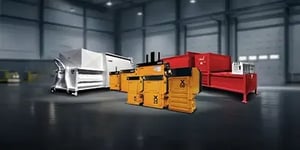
Wastech provides waste recycling equipment services for a wide range of waste handling equipment, including:
- Balers
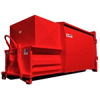
- Compactors
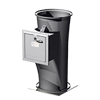
- Chutes
- Bin Lifters
- Crushers
- Fire prevention systems
- Other waste-related equipment
Servicing support is not limited to equipment supplied by Wastech. The same servicing, repair and maintenance support extends to equipment from other manufacturers, with spare parts available across the equipment range where applicable.
Industries We Serve
Different industries place different demands on waste-handling equipment. Factors such as operating hours, waste volumes, material types and compliance requirements all influence servicing needs. Experience across multiple sectors allows maintenance programs to be tailored to different operating environments and business requirements.
Wastech supports businesses and organisations across a broad range of industries, including:
- Waste management
- Retail
- Hospitality
- Health and aged care
- Logistics and warehousing
- Mining and resources
- Automotive and manufacturing
- Infrastructure and engineering
- Agriculture and food processing
- Commercial property and facilities
- Municipal and local government
- Owners' corporations and strata communities
- Schools and universities
- Utilities
- Government and defence
- Events and entertainment
While servicing requirements vary between industries, the focus remains the same: maintaining reliable equipment performance, reducing downtime and supporting safe operations.
Why Servicing Matters
Regular waste equipment servicing is about more than keeping machinery operational. It helps businesses manage safety obligations, maintain equipment reliability, support compliance requirements and reduce the risk of unexpected downtime.
Under Australia's model Work Health and Safety laws, a business with management or control of a plant has a legal duty to ensure equipment is properly maintained, inspected and, where necessary, tested by a competent person. This requirement is outlined in Safe Work Australia's Model Code of Practice for Managing Risks of Plant in the Workplace.
Machinery breakdown insurance policies in Australia commonly exclude damage caused by failing to maintain equipment according to manufacturer recommendations. Insurers also generally view documented maintenance records favourably when assessing claims.
For businesses looking to better understand their equipment condition, Wastech also offers a free equipment health check to identify potential issues, maintenance requirements and opportunities to improve equipment reliability.
The Business Case for Preventative Maintenance
Beyond compliance and safety considerations, planned maintenance can provide a measurable financial benefit by helping businesses reduce unexpected equipment failures, improve reliability and better manage operating costs.
A 2023 survey of more than 3,200 plant maintenance decision-makers by ABB, Value of Reliability, found that unplanned downtime costs the typical Australian industrial business around $349,000 AUD per hour, higher than the $194,000 AUD global average reported in the same survey.
Among those surveyed:
- 69% of Australian businesses experience unplanned equipment outages at least once a month.
- 24% continue to operate equipment until failure without a preventative maintenance strategy in place.
For businesses that do invest in maintenance, the same survey found that:
- 92% reported increased uptime over the previous year.
- 38% reported an uptime increase of at least a quarter.
Equipment reliability was also rated as the top priority when businesses purchase new equipment, ahead of capital cost. This reflects the growing importance of maintaining reliable assets throughout their operational life, rather than focusing only on the initial purchase price.
Wastech's Preventative Maintenance Agreements are structured around predictable maintenance costs and planned servicing, helping businesses move away from reactive repairs and unexpected downtime.
What Determines Your Service Schedule?
The right servicing frequency depends on how waste equipment is used, the environment it operates in and the demands placed on the equipment. A servicing schedule that matches actual operating conditions helps identify wear earlier, reduce the likelihood of breakdowns and maintain reliable performance.
How often waste equipment needs servicing depends on how it's used, not a fixed calendar date. Volume and type of material processed, hours of operation and site environment all affect wear rates. Wastech sets Preventative Maintenance Agreement intervals at 1, 3, 6 or 12 months based on these factors rather than defaulting to a single annual visit.
Australian conditions can introduce additional maintenance considerations. Hydraulic systems in balers and compactors can operate at higher temperatures during Australian summers, which may mean hydraulic oil requires replacement more frequently than standard manufacturer schedules assume.
Dust in industrial and semi-rural environments is also an important factor to consider, as accumulation in electrical enclosures can increase the risk of faults and fire hazards if not cleaned regularly.
-
Preventative Maintenance
Preventative maintenance is one of the most effective ways to improve equipment reliability and reduce the risk of unexpected breakdowns. By identifying wear, addressing minor issues early and maintaining critical components before failure occurs, businesses can better manage equipment performance and operating costs.
Preventative maintenance is scheduled, with checklist-driven servicing carried out before a fault develops, distinct from reactive repairs.
Every visit includes lubricating moving points according to manufacturer guidelines, with grease and lubricants, including around a litre of oil, rags and consumables, covered as part of the visit. Checklist detail beyond that is equipment-specific.
Equipment Key Checks Balers Hydraulic oil condition, limit switch operation, safety interlocks, door locks, auto-tie and eject systems Compactors Same core items as balers, plus bin lifter condition and container mounts Chutes (6-monthly cycle) Loading door operation, throat section damage, discharge deflector cleanliness, discharge fire door and its fusible link -
Repairs
Even with regular servicing, waste equipment may require repairs when components wear, faults occur or operating conditions change. Having access to responsive repair support helps businesses restore equipment operation quickly and minimise disruption.
Waste equipment repairs cover the fixes required when equipment breaks down or does not operate correctly, separate from scheduled preventative maintenance visits.
Repairs are available on demand through the same national service network used for emergency breakdown response, rather than being limited to the next scheduled maintenance visit.
Wastech supports repairs for both its own equipment and equipment from other manufacturers. This capability allows businesses to work with a single service provider across different equipment types, rather than relying only on the original equipment supplier.
-
Emergency Breakdown Response
When waste equipment stops operating, the impact can extend beyond the machine itself. Production delays, workplace disruption and reduced waste processing capacity can quickly affect daily operations, making access to responsive technical support important.
Wastech's emergency breakdown response service operates through a national 24/7 service network across Australia. Priority 1 response targets apply to Preventative Maintenance Agreement customers.
Breakdown Type Target Response Site operation breakdown Within 4 hours Minor repair Within 24 hours These are attendance targets rather than guarantees and apply specifically to Preventative Maintenance Agreement customers under the Priority 1 arrangement. Response timing for other service requests is confirmed at the time of booking.
Minor repairs that require parts not already in stock can take longer to resolve, depending on parts availability.
-
Refurbishment
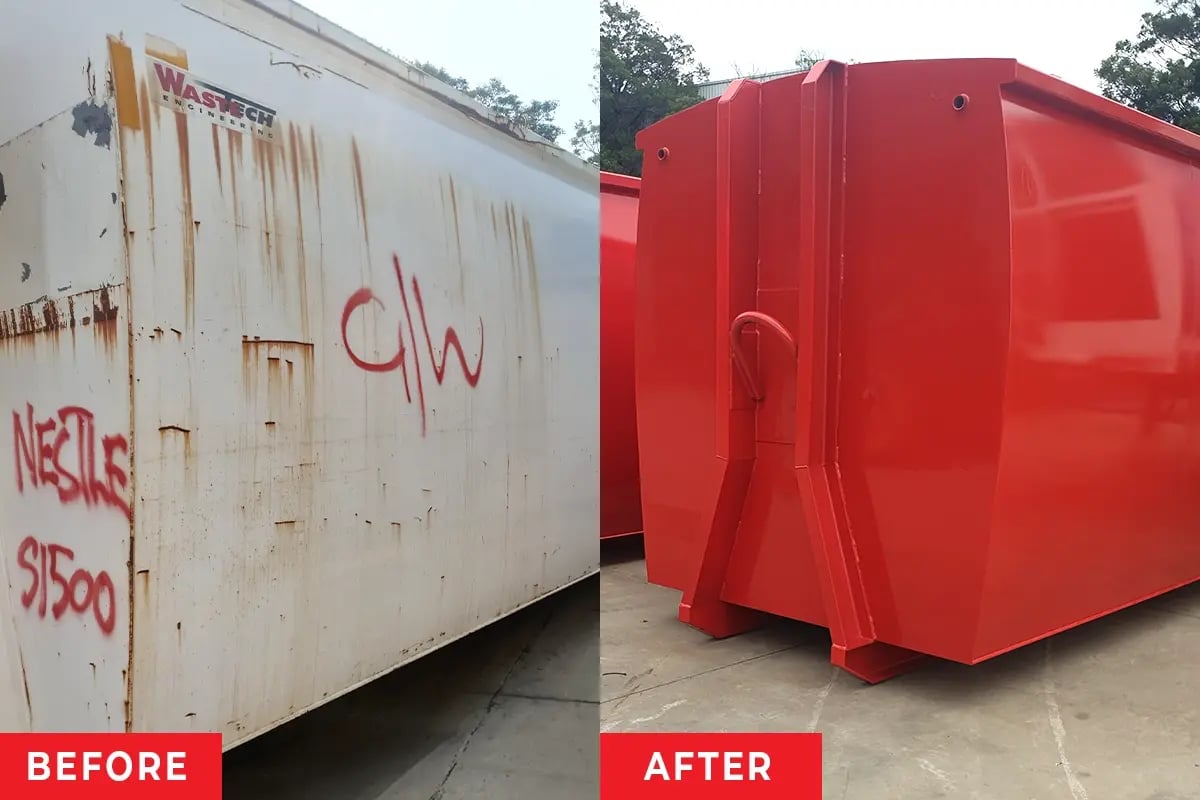
Replacing ageing waste equipment is not always the most practical or cost-effective option. Waste equipment refurbishment can extend the working life of existing assets, restore equipment performance and provide an alternative to purchasing new equipment.
Rather than replacing equipment entirely, refurbishment involves rebuilding, repairing and upgrading key components to help return equipment to reliable operation.
-
Cost and turnaround
On average, refurbishment costs around half the price of a new equivalent unit. Because the work is carried out on existing equipment, turnaround is typically faster than waiting for new equipment to be manufactured and delivered.
-
What's covered
Wastech refurbishes a range of waste-handling equipment, including:
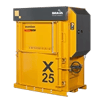
- Vertical balers
- Truck bodies
- Compactors
- Transfer trailers
The scope of refurbishment depends on the equipment type, condition and operational requirements. Each project is assessed to determine which components require rebuilding, replacement or upgrading to restore reliable performance.
-
Why it matters beyond cost
Refurbishing rather than replacing can extend equipment life, reduce unnecessary disposal of large waste-handling assets and help businesses get more value from existing equipment.
-
Premium Spare Parts
Access to the right spare parts is essential for keeping waste equipment operating reliably and reducing delays when components need replacing. Using suitable replacement parts helps maintain equipment performance, support repairs and extend the working life of waste-handling assets.
Wastech supplies waste equipment spare parts for the equipment it services, with the source of parts depending on the original equipment manufacturer.
-
Genuine parts
For equipment manufactured by Wastech, genuine parts are supplied to help maintain machines to their original specifications.
-
Premium parts
For equipment from other manufacturers that Wastech services, premium replacement parts are supplied where suitable. Genuine parts for another manufacturer's equipment are generally not available to Wastech as a third-party service provider.
-
Standalone ordering
Parts can be ordered separately without booking a service or repair visit through spare.parts@wastech.com.au.
-
Baler Consumables
Baling tape, plastic bags and recycling racks are available to support day-to-day equipment operation. Orders placed before 12:00pm are dispatched the same business day; orders after 12:00pm are dispatched the next business day.
To order, email consumables@wastech.com.au.
Wastech's Service Expertise
Choosing who services waste equipment can be just as important as choosing the equipment itself. A service provider with technical knowledge of the equipment, access to engineering support and experience across different waste handling systems can help businesses reduce delays, improve repair outcomes and maintain long-term equipment reliability.
Wastech has been designing, developing and delivering waste equipment for over 30 years, with this engineering experience supporting how equipment is maintained, repaired and serviced.
Technicians are factory-trained, and Preventative Maintenance Agreement customers are assigned a dedicated service account manager rather than being managed through a rotating call centre. For more complex machinery repairs, a dedicated engineering team is available beyond standard on-site servicing.
Working with a provider that has in-house technical capability can help reduce the risk of inconsistent repairs, extended downtime and limited support when equipment issues occur. Wastech partners with your business to help ensure your equipment continues to operate as intended, backed by ongoing service support rather than a one-off transaction.
Should You Repair, Refurbish or Replace?
When waste equipment starts experiencing issues, the right solution depends on more than the immediate fault. Equipment condition, repair history, operating requirements, available support and the cost of downtime all influence whether repair, refurbishment or replacement is the most suitable option.
-
Repair
Repair usually makes sense when the issue is isolated, such as a failed component, hydraulic seal or electrical fault, and the equipment frame and core mechanics remain in good condition.
For equipment that is otherwise performing well, repairs are typically the fastest and lowest-cost way to return it to operation.
-
Refurbishment
Refurbishment becomes a stronger option when wear is affecting multiple areas of the equipment, but the main structure and critical systems, such as the frame and hydraulics, remain fundamentally sound.
This approach can extend equipment life while avoiding the cost and lead time associated with purchasing new equipment.
-
Replacement
Replacement is generally worth considering when repairs become frequent rather than resolving isolated issues, indicating broader equipment wear rather than a single fault.
It may also be the better option when parts and manufacturer support become difficult to access as equipment ages, or when business requirements have changed and the existing equipment is no longer appropriately sized for the workload.
Age, equipment condition and how much downtime a business can absorb while making a decision all influence which option is most appropriate.
How Servicing Is Quoted
Waste equipment servicing requirements vary between sites, so pricing is assessed based on the equipment type, operating environment, service requirements and other site-specific factors. This approach ensures businesses receive a quote that reflects their actual servicing needs rather than a standardised price.
Servicing is quoted per site rather than published as a fixed price, since cost depends on equipment type, volume processed and site-specific factors. Pricing enquiries can be directed to quotes@wastech.com.au.
All servicing includes the same baseline scope, regardless of whether a business enters into a Preventative Maintenance Agreement. A Preventative Maintenance Agreement provides a discount on standard rates and the option to lock in fixed pricing over a 12 to 36-month term, rather than receiving a new quote for every visit.
What to Expect During a Service Visit
Understanding the servicing process helps businesses prepare their site, minimise delays and ensure technicians can complete the required work efficiently. While the exact tasks depend on the equipment and service requirements, a typical service visit follows these steps:
-
Enquiry
Contact Wastech by phone, email at service@wastech.com.au, or through the online Book a Technician form, which routes centrally to the service team rather than a specific branch.
-
Scheduling
A technician is allocated based on location, equipment requirements and urgency.
-
Site arrival and induction
The technician completes a site safety induction, typically within 15 minutes, before starting work.
-
Risk assessment
The equipment and work area are assessed before any work begins.
-
Service and repair work
The technician completes the relevant checklist items, repairs or maintenance tasks required for the equipment.
-
Operational test
The equipment is operated to confirm it is functioning correctly and free from unusual noise, movement or performance issues.
-
Sign-off and reporting
The customer signs off on completed work, the service sticker is updated, and an electronic Service and Compliance report is issued for the asset.
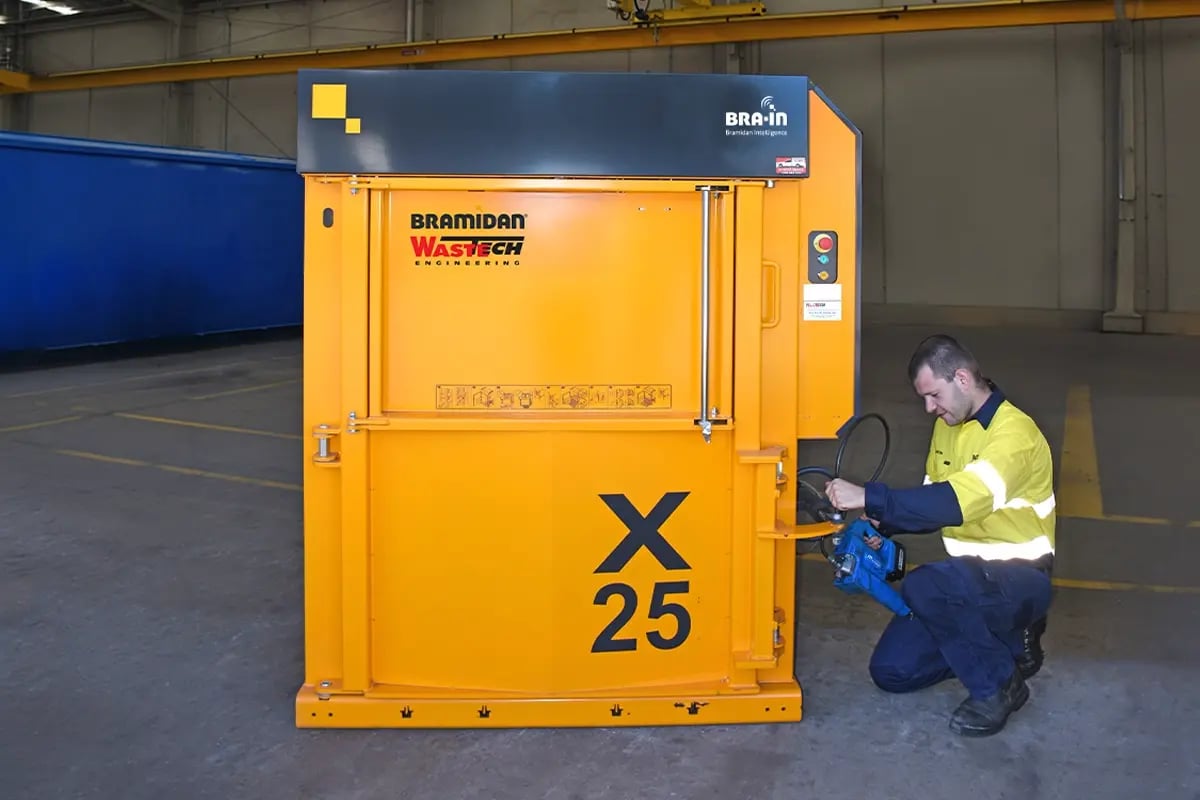
Equipment should be reasonably clear of debris and safely accessible before a technician arrives. Removal of loose debris is included for approximately 10 minutes, with additional time charged separately from the standard visit.
Next Steps
Whether you need scheduled maintenance, urgent repair support, spare parts or pricing information, contacting the right team helps ensure your request is directed efficiently. If you want to understand the current condition of your waste equipment, Wastech can also arrange a free equipment health check to help identify potential issues and maintenance requirements.
| Purpose | Contact |
|---|---|
| Service & breakdowns | service@wastech.com.au or the Book a Technician form |
| Quotes & pricing | quotes@wastech.com.au |
| Scheduling | scheduling@wastech.com.au |
| Spare parts | spare.parts@wastech.com.au |
The Book a Technician form routes centrally to the service team regardless of branch. For the full range of servicing and support options, visit the Service & Support page, or contact directly.

AUTHOR
Shael Esler


Shael leads Wastech's national service operations, driving operational excellence and delivering responsive, customer-focused service across the business. With extensive experience in service management and business development, she is focused on building high-performing teams, improving operational performance and delivering long-term value for customers.