
Automotive & Manufacturing

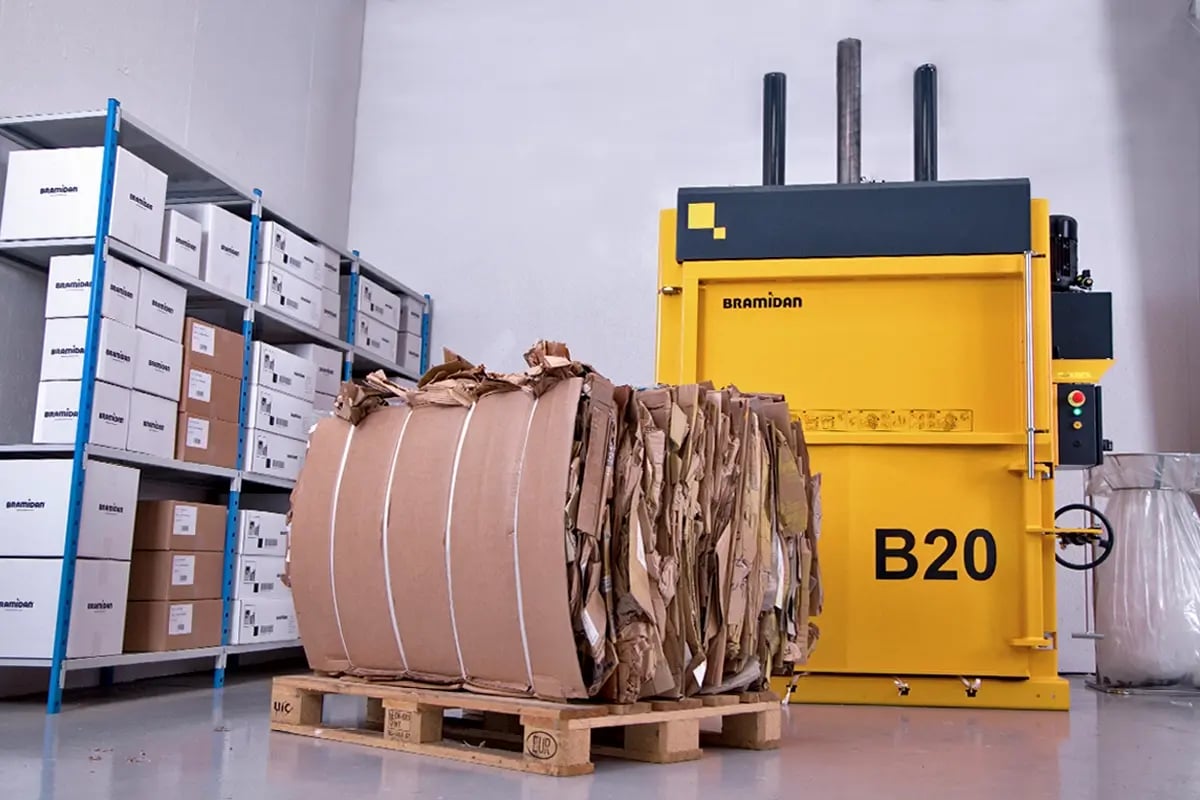
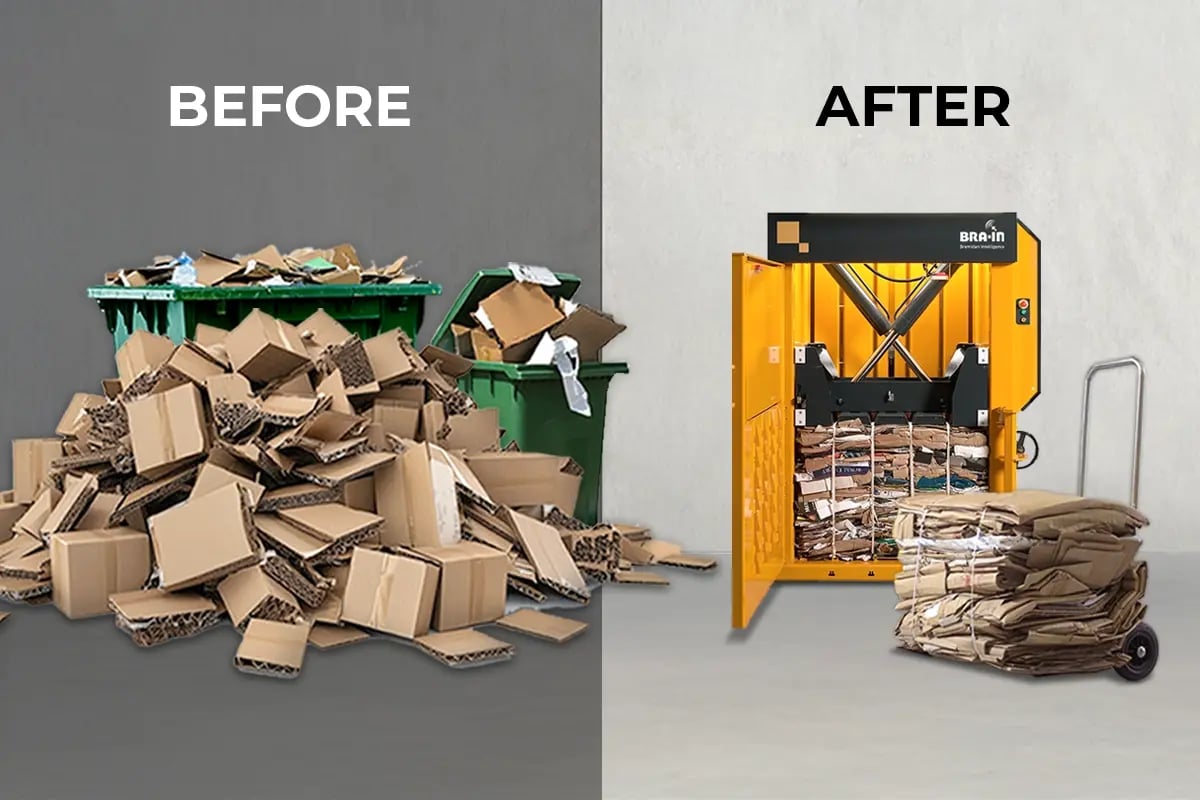
A baler machine is an industrial waste management system engineered to compress loose recyclable materials into dense, standardised bales. According to Bramidan's engineering specifications, hydraulic balers reduce loose cardboard volume by up to 90%, compressing what would fill 5-6 standard 1100L bins into a compact 110kg pallet-sized bale.
For modern Australian businesses, a baler is not just a storage solution. It's a resource recovery asset that converts waste-handling costs into an efficient recycling workflow, reduces bin collections, and often generates revenue from recyclable materials.
How Does a Baler Machine from Wastech Work?
At its core, a baler operates through controlled hydraulic compression:
- Loading the Material
Recyclables are loaded into the baler's chamber through a feed opening. Depending on the model, this opening can range from 770mm (compact balers) to 1825mm (extra-large industrial models). Larger openings, like those on the Baler B5W or Baler B50 XL SD, allow bulky boxes to be thrown in whole without breakdown. - Hydraulic Compression
A hydraulic platen travels downward, compressing the material with forces ranging from 3 tonnes (small retail balers) to 50 tonnes (industrial models). According to Bramidan's technical documentation, press force determines bale density — the higher the force, the heavier and more compact the bale. - Retainer System
Integrated retainer teeth or barbs hold the compressed material in place, preventing it from expanding back upward when the platen retracts. This ensures consistent bale density even for springy materials like plastic film or PET bottles. - Tying the Bale
Once the chamber reaches capacity, the operator secures the bale using professional baling wire or polypropylene strapping tape. Depending on bale size, this involves 2 to 8 ties. Models like the Baler X25 and Baler X30 offer flexible tying options with both wire and strap compatibility. - Ejection
Most modern vertical balers feature hydraulic ejection systems — either manual (operator activates with two-hand safety controls) or fully automatic. The finished bale is pushed onto a pallet or trolley, allowing a single operator to move 200–800 kg bales with minimal physical effort.
Types of Industrial & Recycling Baler Machines
For a full side-by-side comparison of every model, see our complete breakdown of types of baler machines.
Choosing the right baler depends on waste volume, material type, available space, and operational requirements.
Vertical Balers
Vertical balers are the most common type for small to medium businesses. The press platen moves vertically downward to compress materials.
Ideal for:
- Retail stores and supermarkets
- Warehouses and distribution centres
- Small to medium manufacturing
- Schools and universities
Models available:
- Small balers (Baler B3, Baler B4, Baler B5W, Baler X10): 30–110 kg bales, single-phase power, compact footprint.
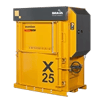
- Medium balers (Baler B20, Baler B30, Baler X25, Baler X30): 200–350 kg bales, single and 3-phase power options, and pallet-sized bales.
- Large balers (Baler B50, Baler X50, Baler B50 XL SD): 400–600 kg bales, industrial capacity.
- Extra Large balers (Baler B50 XL SD): 600–800 kg bales, 1.8 m extra-wide chambers, maximum throughput.
- Galvanised balers (Baler X25 Galv, Baler X50 Galv): Corrosion-resistant construction for wet waste or outdoor placement.
- Drum presses (Drum Press DP16): Compress 200L steel or oil drums by 90%.
Key advantage: Compact design, front-operated (can be installed against walls), operating on single or three-phase power.
Horizontal Balers
Horizontal balers feature a horizontal ram and are designed for continuous, high-volume operations. These are typically found in large-scale recycling facilities, major distribution centres, and manufacturing plants that process multiple tonnes of material daily.
Ideal for:
- Large-scale waste management facilities
- High-throughput manufacturing
- Major logistics hubs
Key advantage: Continuous feeding, very high throughput, mill-sized bales for direct sale to recyclers.
Auto-Tie Balers
Fully automated balers that tie bales without operator intervention. The machine automatically feeds strapping material and secures the bale once compression is complete.
Ideal for:
- High-volume operations with dedicated waste staff
- 24/7 manufacturing environments
- Operations prioritising labour efficiency
Key advantages: Minimal labour input, consistent bale quality, faster cycle times.
Specialty Balers
Designed for specific materials or challenging environments.
Examples include:
- Galvanised balers (Baler X25 Galv, Baler X50 Galv): Corrosion-resistant construction for wet waste or outdoor placement.
- Drum presses (Drum Press DP16): Compress 200L steel or oil drums by 90%.
For smarter applications, an IoT system like the Bramidan BRA-IN monitoring system is automatically integrated to track performance and optimise collection costs and logistics.
Key Benefits of Using a Baler
Reduce waste volume by up to 90%
According to Bramidan's engineering specifications, a loose 1100L bin of cardboard is mostly air. A baled unit allows you to ship the same material in a fraction of the space, drastically reducing the number of collections required.
Lower disposal costs
Fewer bin pickups mean lower waste management fees. Consolidating waste into compact bales reduces collection frequency and associated costs.
Improve recycling rates
By producing clean, separated bales of specific materials (pure cardboard, pure PET, pure plastic film), you can often sell these to recycling partners, turning waste into revenue — supporting Australia's broader circular economy initiatives.
Save valuable floor space
Eliminate overflowing bins and loose cardboard stacks. Bales can be stored compactly and safely until collection.
Enhance site safety and compliance
Baling removes fire hazards from loose cardboard stacks and prevents materials from blocking emergency exits or creating trip hazards.
Generate revenue from recyclables
Clean cardboard and plastic bales, PET bottle bales, and aluminum bales have market value. Recyclers pay for quality, separated materials.
Support sustainability and ESG targets
Track exactly how many tonnes of material you've diverted from landfill. The BRA-IN monitoring system provides data for corporate sustainability and ESG reporting.
Baler vs Compactor: Which is Better?
A common industry question: Should you choose a baler or a compactor? Understanding the distinction is critical for your waste strategy.
| Factor | Baler | Compactor |
|---|---|---|
| Output | Compact, tied bales (transportable units) | Compacted waste inside a sealed container |
| Material Separation | Keeps recyclable materials separated | Supports separate collection of recyclables or general waste streams |
| Recycling Value | High—produces clean, sellable bales | High—maintains recyclable materials in bulk volumes for recycling |
| Best For | Dry recyclables: cardboard, plastic film, PET, paper | High-volume waste streams, including recyclables and general waste |
| Revenue Potential | Yes—sell bales to recyclers | Yes—sell bulk recyclable loads to recyclers |
| Hygiene | Open chamber (options for dry and wet recyclables) | Enclosed waste storage with models available for wet or odorous waste streams |
| Collection Method | Palletised bales collected by recycler | Bulk container transported to recycler, emptied and returned to site |
When to choose a baler:
If you generate significant volumes of dry, recyclable materials (cardboard, plastic, paper) and want to reduce costs whilst supporting sustainability.
When to choose a compactor:
If your business generates high volumes of waste and needs to maximise storage capacity while reducing collection and transport frequency, a compactor can be an effective solution. They are best suited to operations with large, consistent waste streams and can be integrated with automated loading systems such as bin lifters, conveyors and tipplers to improve operational efficiency, reduce manual handling and streamline waste management processes.
For a detailed comparison, read our full Baler vs Compactor analysis or explore our range of compactors.
Industries That Use Baler Machines
Balers are essential across sectors that generate regular recyclable waste:
-
Retail and Supermarkets
Major retailers like Coles, Woolworths, IGA, and Costco rely on balers to manage the constant flow of cardboard packaging from deliveries. A single supermarket can generate 2–5 tonnes of cardboard weekly.
Typical models: Baler B20, Baler B30, Baler X25 for retail operations.
-
Distribution Centres and Logistics
Warehouses handling e-commerce fulfilment process enormous volumes of shipping materials. Balers ensure efficient waste handling whilst maintaining clean operational environments.
Typical models: Baler B50, Baler B50 XL SD, Baler X50 for logistics and warehouse operations.
-
Manufacturing
Factories producing packaged goods generate cardboard, plastic film, and industrial wrapping. Balers streamline waste removal and support lean manufacturing principles.
Typical models: Baler X30, Baler X40W, Baler B50 for manufacturing operations.
-
Hospitality
Hotels, restaurants, and event venues generate cardboard from food deliveries and packaging.
Typical models: Baler B4, Baler B5W, Baler X10 for hospitality operations.
-
Schools and Universities
Educational institutions produce paper, cardboard, and plastic bottles. Balers support campus sustainability programmes and reduce waste management costs.
Typical models: Baler B3, Baler B4, Baler B5W, Baler X10 for education sector operations.
-
Waste Management and Recycling Facilities
Dedicated recycling operators use balers to process collected materials into market-ready bales for resale.
Typical models: Industrial horizontal balers, Baler B50 XL SD and Baler X50
How to Choose the Right Baler for Your Business
Selecting the right baler depends on several operational factors:
-
Waste Volume
Estimate your weekly or monthly volume of recyclable materials. A small retail store generating 10–20 boxes per day needs a different solution than a distribution centre processing 5 tonnes weekly.
Volume guide:
-
Material Type
Different materials require different press forces and chamber configurations:
Cardboard only: Most vertical balers work well.
Mixed recyclables: Choose X-Series models with higher press force and retainer systems.
Wet or outdoor environments: Select galvanised models (Baler X25 Galv, Baler X50 Galv).
-
Available Space
Measure your installation area, including:
- Floor space: Small balers occupy less than 1.5m²; large models need 3–4m².
- Ceiling height: Standard models require 2.5–3.5m clearance; X-Series low-profile balers fit under 2.4m ceilings.
- Door access: Ensure the baler can be delivered and positioned.
-
Power Supply
Single-phase (240V standard outlet): Small balers like Baler B3, Baler B4, Baler B5W, Baler X10 (1-phase). Plug-and-play installation.
Three-phase (415V industrial power): Medium and large balers require a 3-phase supply. If you don't have this infrastructure, installation costs may increase significantly. Check your power setup or consult with our experts before selecting a model to avoid costly electrical work.
-
Automation Level
- Manual ejection: Operator activates bale ejection with two-hand controls (models: Baler B3).
- Automatic ejection: Bale tips out automatically when the chamber is full (most models from Baler B4 upward).
- Full automation: Auto-tie systems available for high-volume operations.
-
Budget and ROI
Baler pricing varies based on size, features, and automation. Factors affecting cost include press force, chamber size, power requirements, and automation levels. All Bramidan balers include BRA-IN monitoring.
Consider:
- Operational savings: Reduced bin collections typically deliver ROI within 12–24 months.
- Government incentives: NSW Bin Trim Rebates can cover up to 50% of purchase and installation costs.
For equipment selection guidance, contact our technical team.
-
Smart Monitoring and Data Tracking
All Bramidan balers include the BRA-IN monitoring system as standard equipment. This cloud-based IoT solution tracks machine performance, predicts maintenance requirements, and provides ESG reporting data. Consider how real-time operational insights and automated collection scheduling can benefit your waste management strategy, particularly for multi-site operations.
-
Consult with an Industry Expert
Baler selection is not a one-size-fits-all decision. Working with an experienced waste management consultant ensures equipment capacity matches your actual throughput. An industry expert can conduct on-site waste audits, measure material volumes over representative periods, and recommend solutions tailored to your operational workflow — helping you avoid costly mistakes like undersized equipment or unnecessary capital expenditure.
-
Choose a Supplier with Comprehensive After-Sales Support
Equipment reliability depends on proper installation, operator training, and ongoing maintenance. Select a supplier that provides:
- Professional installation: Correct positioning, electrical connection, and commissioning.
- Operator training: Safe loading procedures, tying techniques, and emergency protocols.
- Preventative maintenance programmes: Scheduled servicing to maximise equipment lifespan.
- Parts availability: Fast access to genuine manufacturer parts when needed.
- Technical support: Responsive breakdown assistance to minimise downtime.
A baler is a long-term investment — comprehensive after-sales support protects that investment and ensures consistent operational performance.
How Much Does a Baler Machine Cost in Australia?
Baler pricing depends on capacity, features, and your specific operational requirements. Whilst exact pricing varies per installation, here's what influences cost:
-
Factors Affecting Baler Price
Bale capacity and press force: Small balers producing 40–60 kg bales with 3–4 tonne press force sit at the entry level. Industrial models producing 400–800 kg bales with 50 tonne press force represent a higher investment.
Automation level: Manual tie and ejection systems cost less than automatic ejection or full auto-tie configurations. Consider labour savings when evaluating automation.
Power requirements: Single-phase balers install quickly with standard power. Three-phase models may require electrical upgrades if your facility lacks a 415V industrial supply.
Chamber size and design: Compact footprint models vs. extra-wide chambers (Baler B30W: 1.5 m, Baler B50 XL SD: 1.8 m) or low-profile X-Series designs affect pricing.
Special features:
- BRA-IN monitoring system: IoT connectivity, predictive maintenance and ESG reporting.
- Galvanised construction: Corrosion resistance for wet environments or outdoor placement.
- Custom powder coating: Branding or colour-matching to the facility.
-
Investment Considerations
Government rebates: The NSW Bin Trim Rebates Programme (administered by NSW EPA) can offset up to 50% of equipment purchase and installation costs for eligible NSW businesses. We can assist with the application process and compliance documentation.
Volume discounts: Multi-site deployments (retail chains and franchise groups) often qualify for fleet pricing.
Maintenance and Safety
A baler is a hydraulic system requiring routine care to ensure safety, compliance, and long operational life.
-
Regular Servicing
Recommended maintenance schedule:
- Weekly: Visual inspection of hydraulic hoses, wire/strap supplies, and chamber cleanliness.
- Monthly: Check retainer teeth, lubricate moving parts, and inspect door seals.
- Bi-Annually: Professional service inspection (hydraulic system, electrical components, safety interlocks), pressure testing, seal replacement, electrical certification.
We offer preventative maintenance packages with scheduled inspections across all states.
-
Safety Standards and Compliance
Modern balers include multiple safety features:
- Two-hand ejection controls: Prevent accidental activation.
- Emergency stop buttons: Immediate shutdown.
- Interlock systems: Door must be closed before the press cycle starts.
- EN16500 compliance: European safety standard for waste compaction equipment, aligned with Australian workplace safety standards.
- Load indicator lights: Signals when the chamber is full.
Operator training: Whilst balers are designed for general staff operation, proper training ensures safe material loading, tying procedures, and emergency protocols.
-
Service and Support
We provide comprehensive after-sales support:
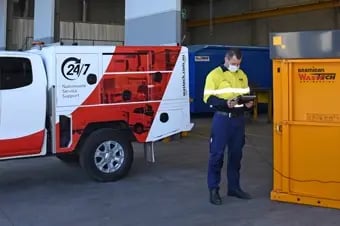
- 24/7 emergency breakdown response: Nationwide coverage across all states and territories.
- Premium spare parts: Genuine Bramidan parts stocked for fast dispatch.
- Remote diagnostics: BRA-IN-connected balers enable remote troubleshooting, reducing downtime.
- Preventative maintenance: Scheduled servicing to identify issues before costly failures.
Smart Technology: The BRA-IN Monitoring System
All Bramidan balers are compatible with the BRA-IN monitoring system, a cloud-based IoT solution that tracks machine performance, predicts maintenance requirements, and provides ESG reporting data. The system enables remote diagnostics and automated collection scheduling for multi-site operations.
Why Choose Wastech for Your Baler
Exclusive Bramidan Distributor in Australia
Wastech is the sole Australian distributor of Bramidan, the global leader in vertical baling technology with over 30 years of engineering excellence. Every Bramidan baler in Australia is supplied, installed, and supported by Wastech.
Deep Baler Expertise Since 1993
For over three decades, we've specialised in waste compaction equipment. Our technical team understands baler mechanics, hydraulic systems, and operational integration across every industry sector.
Nationwide Service & Parts Availability
We provide 24/7 breakdown support and preventative maintenance across all Australian states and territories. Our parts inventory covers the complete Bramidan range, and we can source components for other baler brands to keep your equipment operational.
Complete Solution Provider
From waste audits and equipment specification through installation, operator training, and ongoing maintenance—we manage the entire process. One partner, one point of contact, consistent service standards.
Proven Technology, Local Support
Bramidan balers combine European engineering standards with our Australian operational expertise. We understand local waste streams, climate considerations, and compliance requirements specific to Australian businesses.
Conclusion
Selecting the right baler requires careful assessment of waste volumes, material types, and operational constraints. Understanding the technology, evaluating operational requirements, and matching equipment capacity to actual throughput ensures that Australian businesses make informed decisions that support both financial and sustainability objectives.
Our team can provide site-specific recommendations based on your waste profile. For detailed equipment specifications or to arrange a waste audit, contact our team.
Frequently Asked Questions
What is a baler machine used for?
A baler machine compresses recyclable materials like cardboard, plastic film, paper, PET bottles, and aluminum cans into compact, tied bales. Using Bramidan's specifications, this reduces waste volume by up to 90%, lowers disposal costs, frees up space, and produces market-ready bales for recycling.
How much does a baler cost in Australia?
Baler pricing varies based on capacity, automation, and features. Small single-phase balers suitable for retail start at one investment level, whilst large industrial three-phase models represent a higher tier. Factors affecting final cost include press force, chamber size, power requirements, and optional upgrades such as galvanised construction or custom powder coating. If your business is located in NSW, the NSW Bin Trim Rebates Programme can offset up to 50% of costs for eligible businesses.
What baler size do I need?
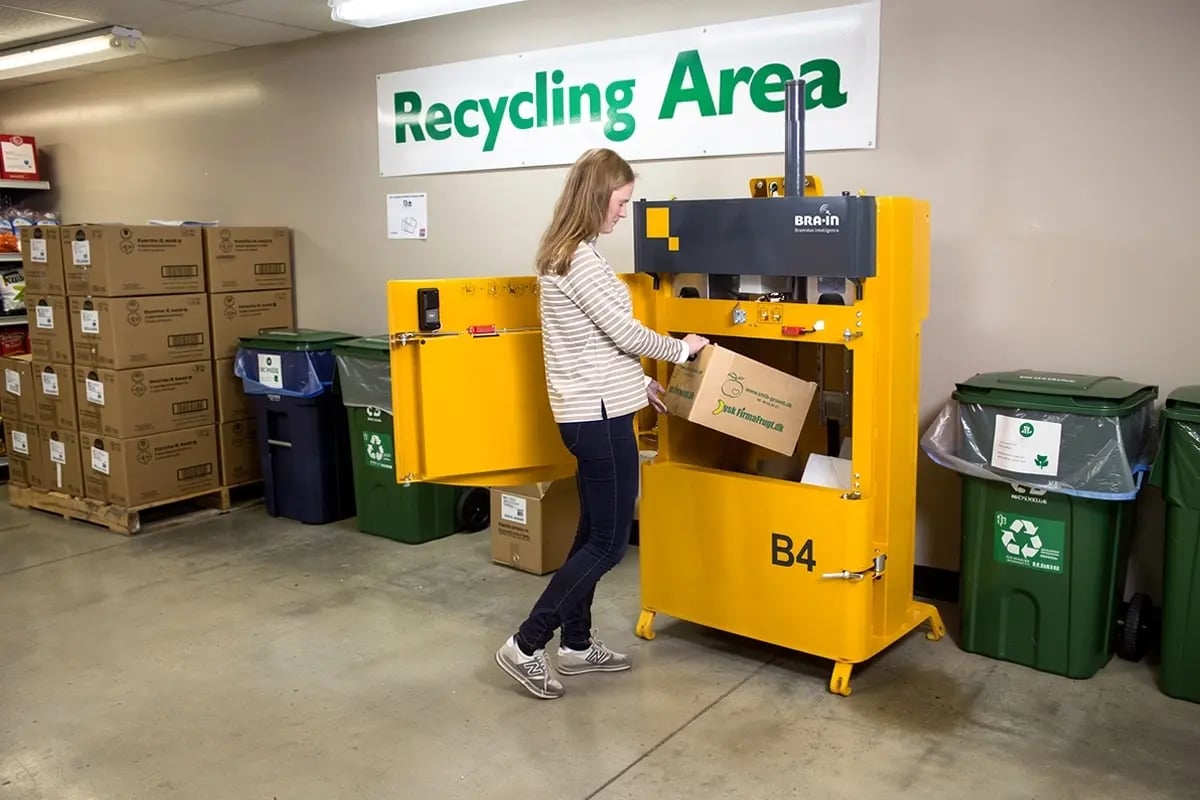
Baler size depends on your waste volume, material type, and available space. As a guide:
- Small balers (Baler B3, Baler B4): 0.5-1 tonne cardboard/month, retail stores, small offices
- Medium balers (Baler B20, Baler X25, Baler B30): 2-5 tonnes/month, supermarkets, warehouses
- Large balers (Baler B50, Baler B50 XL SD): 5+ tonnes/month, distribution centres, manufacturing
Is a baler better than a compactor?
It depends on your waste type:
- Choose a baler if you generate dry recyclables (cardboard, plastic, paper) and want to produce clean, sellable bales whilst reducing disposal costs.
- Choose a compactor if your waste is mixed, contaminated with food or liquids, or consists of general refuse that cannot be recycled.
Balers support recycling and can generate revenue from bale sales. Compactors handle mixed waste streams and seal odours. Read our full Baler vs Compactor comparison.
What materials can a baler compress?
Most vertical balers handle:
- Cardboard and corrugated packaging
- Plastic film and stretch wrap
- Office paper and newsprint
- PET bottles
- Aluminum and tin cans
- Hard plastics
- Textiles
- EPS (expanded polystyrene)
Specialty balers like the Drum Press DP16 compress steel and oil drums. Galvanised models (Baler X25 Galv, Baler X50 Galv) handle wet materials or outdoor placement.
Do balers require three-phase power?
Not all balers require three-phase power:
- Single-phase (240V standard outlet): Baler B3, Baler B4, Baler B5W, Baler X10 (1-phase)
- Three-phase (415V industrial power): Medium and large balers (Baler B20 and above)
If you don't have three-phase power and need a medium/large baler, installation will require electrical upgrades. Discuss power availability during your initial consultation to avoid unexpected costs.
How long does a baler last?
According to Bramidan's service data, with regular preventative maintenance, a quality industrial baler typically provides 10-15+ years of reliable operation. Bramidan balers are engineered for durability, featuring robust hydraulic systems, powder-coated finishes, and premium components. We offer maintenance packages to maximise equipment lifespan.
Can a baler handle wet cardboard?
Heavily saturated cardboard can cause issues with bale integrity and machine hygiene. It's best to keep waste sources dry. If wet waste is unavoidable, consider galvanised models (Baler X25 Galv, Baler X50 Galv) designed for challenging environments. These features corrosion-resistant construction and can be placed outdoors.

AUTHOR
Peter Jessup


Peter Jessup is a Product Specialist at Wastech Engineering, focused on balers, compactors and fire detection and suppression systems. With over 12 years at Wastech, he works with operators across waste and resource recovery, shopping centres, retail, hospitality and distribution centres, delivering efficient, dependable solutions that improve operational performance and support safer, more sustainable waste management.