

Automotive & Manufacturing





What Is a Bin Lifter?
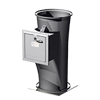
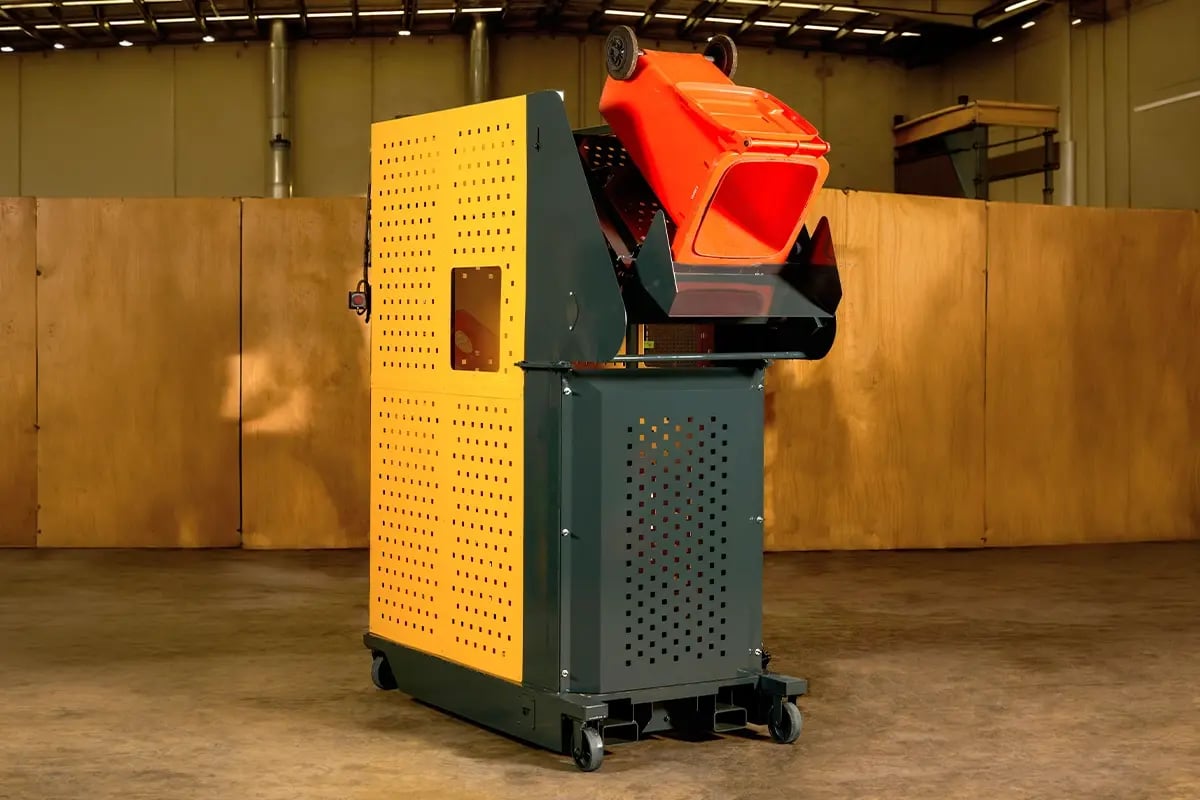
A bin lifter is an automated machine that mechanically lifts and inverts wheelie bins, emptying their contents into a larger receptacle — a skip bin, waste container, or compactor — without manual lifting. For facilities that empty wheelie bins daily, the bin lifter removes the most physically demanding step from the process entirely.
Manual bin handling requires workers to grip, lift, and tip bins repeatedly by hand — a task that places operators at risk of musculoskeletal injury through sustained awkward postures and repetitive force, according to Safe Work Australia. A bin lifter transfers that load to the machine instead.
How does the Wastech Bin Lifter Work?
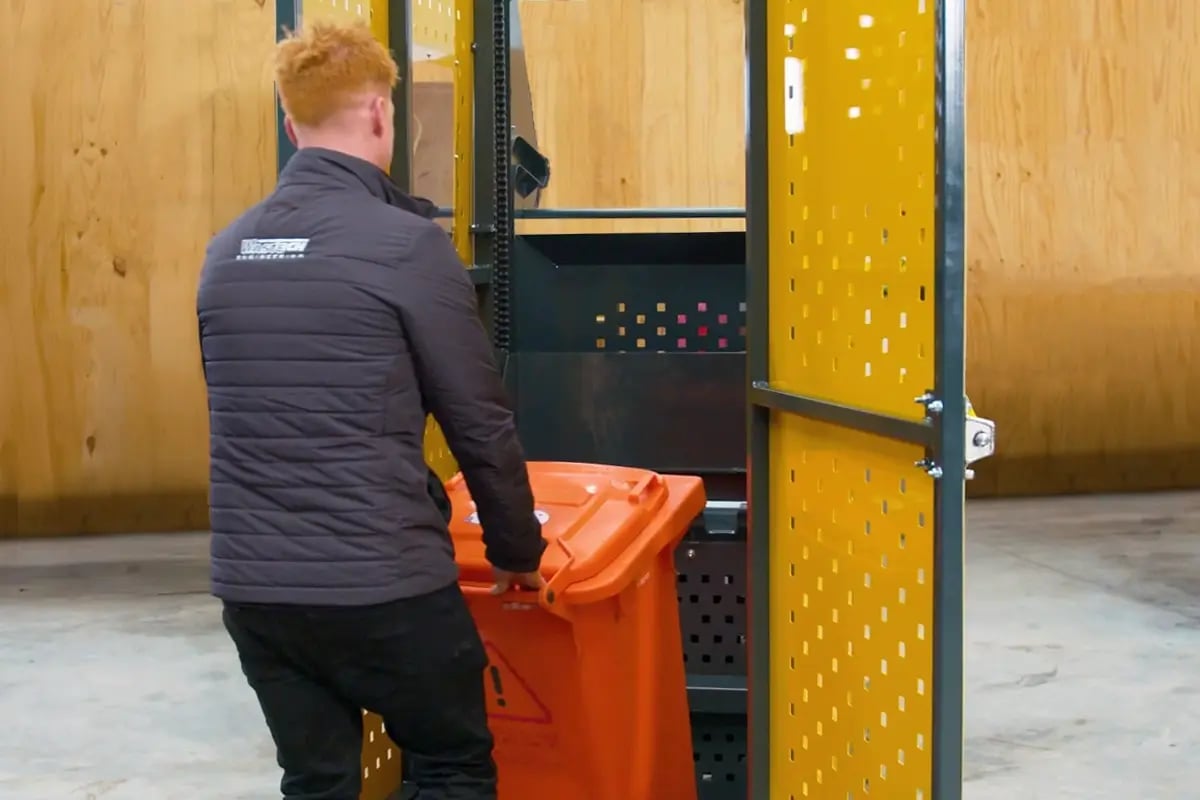
The operating cycle of a bin lifter follows a consistent sequence regardless of model or drive type:
- The wheelie bin is rolled into the open cage
- The access gate is closed and locked — the key-lockable interlocked gate prevents the cycle from starting until the cage is secured
- The drive lifts the bin upward along the lift track
- Once fully raised, the bin inverts and empties by gravity into the receptacle below
- The unit lowers back to the loading position, the gate opens, and the next bin can be loaded
The operating principle hasn't changed significantly across generations of bin lifters — what has changed is how well the machine is engineered around the people using it.
Our philosophy at Wastech Engineering is to understand our customers' needs and implement their feedback into our equipment design. We are pleased to introduce the redesigned bin lifter, with key improvements focused on site safety, greater versatility in tipping heights and the ability to customise the unit to suit different site requirements.
That customer-led approach drove the redesigned Slimline Bin Lifter's key improvements directly — improved site safety, greater versatility across tipping heights and greater flexibility across different site requirements.
Types of Bin Lifters
Bin lifters vary by drive mechanism, installation type, and the range of bin sizes they handle. Understanding these differences helps identify which configuration suits a given site.
-
By Drive Type — Electric, and Hydraulic
Electric bin lifters use a motor-driven chain or screw drive to handle the lift cycle automatically. Chain drive systems are the more common choice for bin lifters in the commercial capacity range — they handle variable bin weights reliably and are straightforward to service when maintenance is needed.
Hydraulic bin lifters use an oil-driven system to power the lift mechanism.
-
By Installation Type — Stationary vs Mobile
Stationary bin lifters are installed within a waste room or handling area, positioned alongside a compactor or large collection container. These are facility-based units designed to process waste on-site — Wastech's bin lifter falls into this category.
Mobile and trailer-mounted bin lifters attach to vehicles and are used outdoors, primarily for bin cleaning and collection services. These units cover a different application from stationary bin lifters, with Wastech's range focused on stationary solutions for commercial and industrial waste handling.
-
By Bin Size Compatibility
Most stationary bin lifters are designed around a specific capacity range:
- Light-duty: up to 240L — suited to smaller commercial sites with lower waste volumes
- Mid-range: up to 660L — covers the majority of standard commercial wheelie bin sizes
- Heavy-duty: up to 1,100L and beyond — for high-volume operations and larger format bins
The Wastech Slimline Bin Lifter handles 120L, 240L, 660L and 1,100L wheelie bins as standard.
What Is a Bin Lifter Used For? Industries and Applications
Australia generated 79.0 million tonnes of waste in 2024–25, according to the Australian Government's Department of Climate Change, Energy, the Environment and Water (DCCEEW). Waste and resource recovery facilities play an important role in managing these volumes, with bin lifters helping streamline bin handling and support efficient waste management operations.
-
Retail and Hospitality
Retail stores, shopping centres, hotels, and restaurants typically operate in environments where waste must be processed frequently within limited back-of-house space. A bin lifter allows bins to be emptied into compactors or collection containers without manual lifting — keeping the waste room operational without slowing down other site activity.
-
Food Service and Manufacturing
Commercial kitchens, food processing sites, and manufacturing plants generate heavier, wetter waste streams than most general commercial environments. The enclosed cage design of a stationary bin lifter supports safe decanting of general waste and organics, reducing the manual handling risk that comes with repeatedly tipping heavy, liquid-laden bins in a busy production environment.
-
Recycling and Waste Transfer Facilities
Recycling centres and transfer stations process high volumes of bins daily across plastics, cardboard, metals, and organics. Automating the bin-emptying process keeps material moving without requiring a worker to handle each bin manually at every point in the stream — critical when throughput volumes are high and collection cycles are continuous.
-
Property Management and Strata
Multi-unit residential buildings and strata operations generate frequent bin movements across multiple small to mid-sized bins throughout the week. A bin lifter removes the need for cleaning and maintenance staff to manually lift bins during collection, reducing both injury risk and the time spent on each individual bin movement.
-
Healthcare and Education
Hospitals, clinics, schools, and universities operate under more rigorous procedural requirements around waste separation, handling, and accountability than most commercial sites. The enclosed cage and interlocked access gate give these facilities a level of operational control that open-frame handling cannot provide — each lift cycle requires the gate to be properly secured before it begins.
Key Safety Features to Look For in a Bin Lifter
Not all bin lifters are built to the same safety standard. Three features are worth checking directly when evaluating a unit.
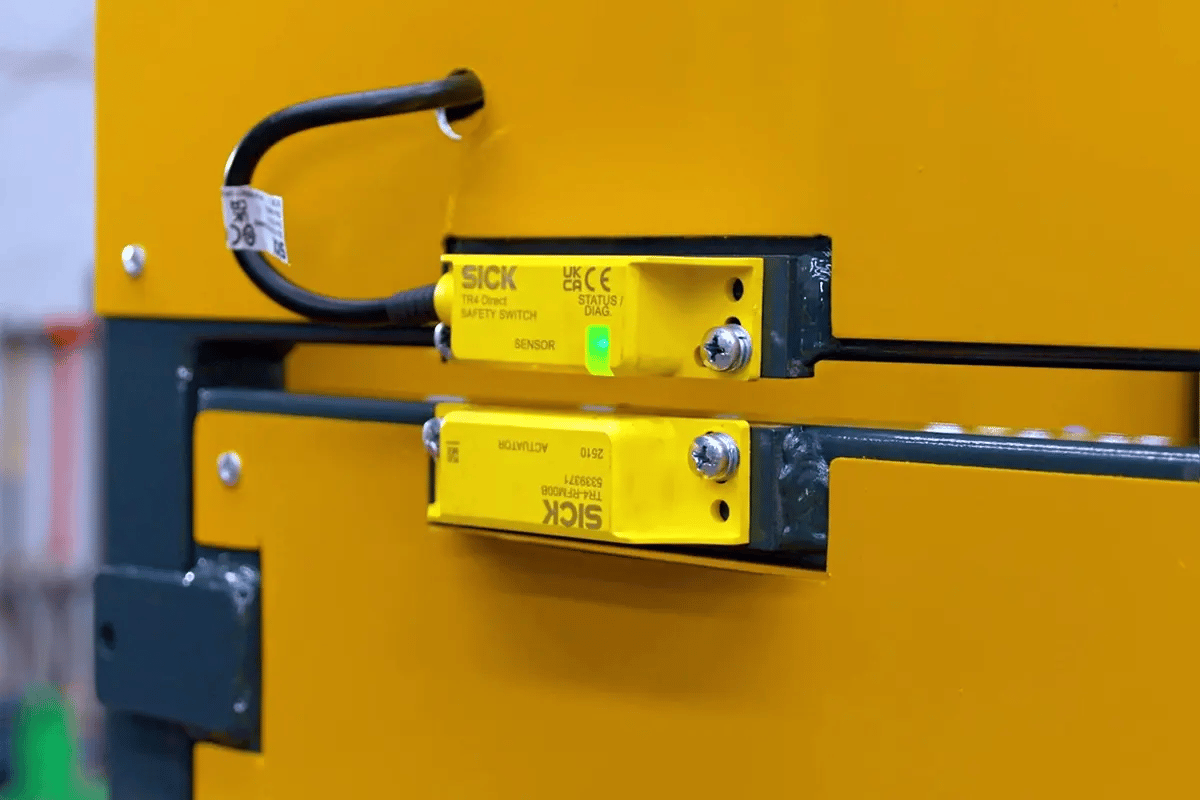
Safety cage. A safety cage surrounding the lift zone helps prevent operator contact with the bin and lifting mechanism during the cycle. Cage designs are not always fully enclosed — this varies depending on the model. Wastech bin lifters include safety cages that meet Australian standards.
Interlocked, key-lockable access gate. An interlocked gate prevents the lift cycle from initiating while the gate is open. Key-lockability restricts access to authorised operators and ensures the unit cannot be activated inadvertently.
Safety-rated interlock switch. In practice, a safety-rated electronic interlock switch does something a mechanical latch cannot — it actively verifies that the gate is physically secured before the drive receives power. A mechanical latch can appear closed while not properly engaged; a safety-rated switch removes that ambiguity entirely by requiring confirmed electronic closure before the cycle can begin.
How to Choose a Bin Lifter for Your Facility
How to Choose a Bin Lifter for Your Facility
-
Bin Size Compatibility
Check the unit's rated capacity range against the bins in use on-site. The Wastech Bin Lifter handles 120L, 240L, 660L and 1,100L wheelie bins as standard. If the site uses eurobin or tote-style bins — square-sided containers common in food processing environments — confirm the unit's latching system is compatible. Eurobin formats use a different comb-lift mechanism (the latching system that grips the bin's lip) to standard wheelie bins, and not all stationary bin lifters are designed to accommodate both.
-
Power Supply
Confirm the site's electrical configuration before specifying a unit. Single-phase power is standard in most light commercial installations; 3-phase power (common in industrial electrical setups) is more prevalent in manufacturing and warehousing environments. The Wastech Slimline Bin Lifter supports both configurations, which avoids the need for electrical upgrades in most cases.
-
Installation Space
Measure the waste room or handling area — specifically the clearance required for the lift mechanism at full height and the space needed for the gate swing. One consideration worth checking at this stage: floor footprint and gate swing clearance are separate measurements — a unit that fits the room may still not have enough space for the access gate to open fully. A slimline design addresses both constraints and is worth prioritising for tight or restricted waste handling areas.
-
Standalone vs Compactor-Integrated
A standalone bin lifter empties into a skip bin, large collection container, or hopper. A compactor-integrated setup feeds waste directly into the compactor's loading opening — the better option for high-volume sites where bins are being turned over continuously and compaction reduces collection frequency.
-
Waste Stream
For most facilities, general waste, recyclables, and organics are all handled comfortably by standard bin lifter systems. Facilities handling clinical, hazardous, or sharps waste should confirm suitability with the supplier directly, as additional containment considerations may apply.
How Much Does a Bin Lifter Cost in Australia?
Bin lifter pricing varies depending on capacity, configuration — standalone versus compactor-integrated — and the specific installation requirements of the site. There is no single figure that applies across all applications.
For accurate pricing tailored to your site's bin sizes, power supply, and waste volumes, the practical first step is a direct conversation with a supplier. Enquiries about the Wastech Bin Lifter can be made via the product page.
Explore Wastech's Bin Lifter Range
Wastech Engineering's approach to product design starts with one principle — understanding what customers need and building it directly into the equipment. The redesigned Wastech Bin Lifter reflects that: improved site safety, greater versatility in tipping heights, and more flexibility across different site requirements. Driven by innovation and built for Australian commercial waste handling.
The Slimline Bin Lifter is now available nationwide. To learn more or enquire about the right setup for your facility, visit the Wastech Bin Lifter product page.
Frequently Asked Questions
What is a bin lifter?
A bin lifter is an automated machine that mechanically lifts and inverts wheelie bins to empty their contents into a larger receptacle — a skip bin, waste container, or compactor — without manual lifting. Bin lifters are used across commercial facilities to remove the physical lift-and-tip cycle from daily waste handling, reducing injury risk and improving operational consistency.
What is the difference between a bin lifter and a bin tipper?
There is no functional difference. Bin lifter, bin tipper, bin puller, and cart dumper all describe the same piece of equipment. The terminology varies by manufacturer, region, and industry — the machine, operating principle, and application are the same regardless of which name appears on a specification.
What size wheelie bins does a bin lifter handle?
Most commercial bin lifters are built around standard wheelie bin sizes. The Wastech Bin Lifter handles 120L, 240L, 660L and 1,100L wheelie bins as standard.
Can a bin lifter integrate with a compactor?
Yes. Bin lifters can operate as standalone units — emptying into a skip bin or collection container — or integrate directly with a compactor system. In a compactor-integrated setup, the bin lifter tips waste directly into the compactor's loading opening, making it well suited to sites that process multiple bins per day and want to reduce collection frequency.
What safety features should a bin lifter have?
Three features are worth confirming: a safety cage surrounding the lift zone; an interlocked, key-lockable access gate to prevent the unit from operating while open; and a safety-rated electronic interlock switch that actively verifies gate closure before the drive activates. The level of cage enclosure varies depending on the model.
How does an automatic bin lifter work?
An automatic bin lifter uses a powered drive system to raise a wheelie bin from the loading position to tip height, where the bin inverts and empties by gravity. The cycle is initiated by the operator closing and locking the access gate, which activates the lifting mechanism. Once the tip cycle completes, the unit returns to the loading position automatically.
What industries use bin lifters?
Bin lifters are used across retail and hospitality, food service and manufacturing, recycling and waste transfer facilities, property management and strata, and healthcare and education. These sectors share a common need — regular, high-frequency wheelie bin emptying in environments where manual lifting creates injury risk or slows down operational throughput.
How do you use a bin lifter?
Operating a bin lifter follows the same sequence regardless of model: roll the wheelie bin into the open cage; close and lock the access gate; the lift cycle activates and raises the bin to tip height automatically; wait for the unit to return to the loading position; open the gate and retrieve the bin. The interlocked gate ensures the cycle cannot start unless the cage is properly secured.

AUTHOR
Dan McConnell


Dan McConnell is the Technical Product Manager at Wastech Engineering, with over 13 years at the company spanning roles in mechanical design, engineering coordination, and engineering management. With a foundation in mechanical design engineering and formal Lean Manufacturing training, he leads product development across the waste handling equipment range, delivering solutions that improve operational efficiency and reduce manual handling.