
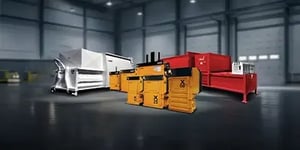

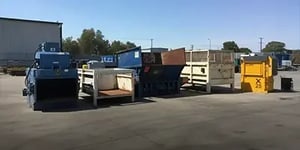
Automotive & Manufacturing



For most commercial operations, waste doesn't feel expensive until you look at the collection invoice. A waste compactor machine is an industrial system that compresses waste before collection. It reduces the volume stored on site, makes better use of available space and can reduce how often collections are needed. Where waste is collected on a fixed schedule, containers may be emptied before they are full, which means more collections than the volume needs. A compactor can change that by allowing operators to store more material between collection runs.
The result is a more practical way to manage waste: instead of relying solely on fixed collection schedules, sites can plan storage and collection around the volume and type of waste they generate.
This guide covers what a waste compactor machine is, how the technology works, the types available in commercial use, how compaction ratios connect to real collection savings, and how to determine whether a compactor is the right solution for a specific site.
What Is a Compactor Machine?
A compactor machine is an industrial waste handling system that applies mechanical force — typically hydraulic — to compress waste into a fraction of its original volume inside a sealed receiver container. The container holds the compacted material until it reaches capacity, at which point it is collected, emptied or replaced, and the cycle continues.
The mechanism is straightforward, and the value lies in how much material can be stored and transported per collection. Uncompacted waste contains significant void space between individual materials. A compactor reduces this volume by applying mechanical force, allowing more material to be stored in the same container. For a site currently being serviced multiple times per week, the reduction in lift frequency — and the corresponding reduction in cost — is often measurable within months of installation.
Compactor machines are distinct from balers, which also compress waste but bind it into bales intended for recycling and recovery. Both use mechanical force to compress material, but they solve different operational problems. A baler produces a portable, tied bale for resale or recycling — well-suited to clean cardboard or plastic film. A compactor loads directly into a sealed container. It can handle a broader range of materials than a baler: general waste, food organics, and mixed recyclables, but also clean dry recyclables like cardboard and paper, with large-format models supplying compressed material directly to recycling companies.
Waste compactors are also distinct from the compaction equipment used in construction — soil compactors, plate compactors, and drum rollers, which compact ground materials to create stable foundations for roads and structures. Both share the name "compactor," but they serve entirely different purposes. This guide covers waste compactor machines: the equipment used in commercial and industrial settings to compress and manage waste between collections.
How Does a Compactor Machine Work?
Quick starting point
Commercial compactor machines use one of two core mechanisms.
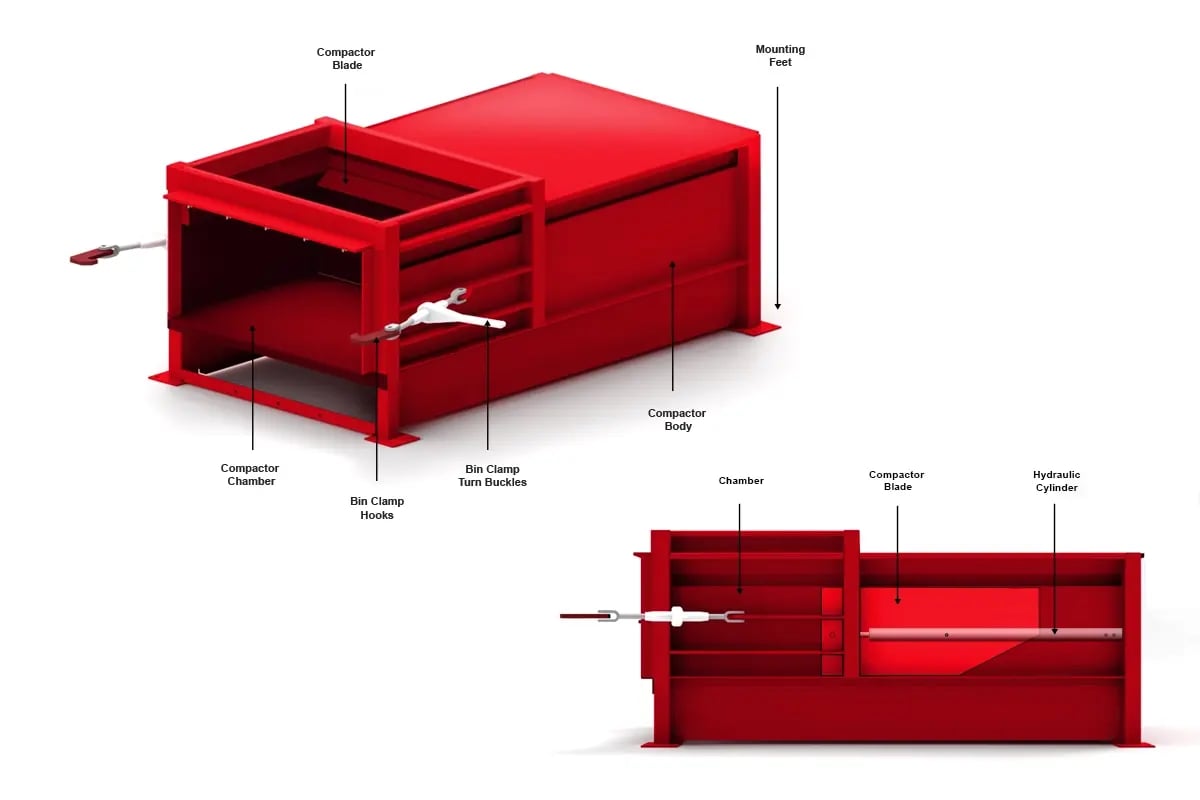
Hydraulic blade compactors extend a powered ram across a compaction chamber, pushing loaded waste through a discharge opening into a connected receiver container. The ram retracts, more waste is loaded, and the cycle repeats. The compaction force applied varies considerably by model and application — compaction performance depends on the machine's design and force, as well as the type and density of the material being compacted. The resulting volume reduction determines how much material can be stored before the container is full. The specific force ratings relevant to each configuration are covered in the types section below.
Auger-based compactors rotate a helical screw continuously to drive waste through the discharge opening into the receiver. This mechanism can be configured for wet and organic material, with continuous movement supporting consistent feed and compaction.
Both designs can be paired with automated monitoring. Wastech's SmartWeigh system tracks fill levels in real time and triggers collection only when the container is actually full — removing the inefficiency of schedule-based collections that empty partly-filled containers.
For a step-by-step breakdown of the full mechanical cycle, see how a garbage compactor works.
Types of Compactor Machines
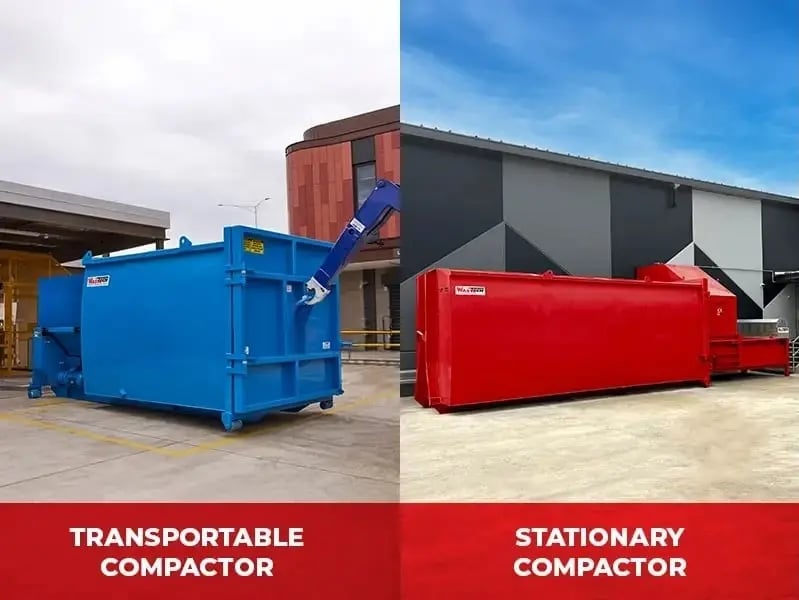
Commercial compactor machines fall into two main categories based on how the compaction unit and the receiver container relate to each other — and what that relationship means for the waste streams they can handle. Other configurations exist in the wider market — bag compactors and tumble compactors, for instance — but transportable and stationary compactors represent the types most commonly deployed across Australian commercial and industrial sites. Purpose-built machines designed around specific site constraints or waste streams are covered in the section that follows.
-
Stationary Compactors
In a stationary compactor, the compaction head is permanently installed on site. The receiver container detaches when full, is hauled away by a collection vehicle, and is replaced with an empty one. The head stays in place.
This arrangement suits high-volume waste and recycling streams where throughput, site layout and collection arrangements justify a permanent installation. Stationary compactors are the most common configuration across commercial and industrial settings for this reason.
The Wastech stationary range covers a wide output spectrum. The S1000 through S3000 suit most commercial applications — compatible with 11 m³ to 40 m³ receiver bins, generating up to 225 kilonewtons (kN) of compaction force across plastic, paper, cardboard, and general waste. The S1000 is specifically designed with a compact head for installations where clearance is constrained.
For higher-output requirements, the S4000 steps up to 340 kN with throughput of up to 310 m³ per hour, suited to larger containers and transfer trailer applications. At the top of the range, the S8000 handles up to 480 m³ per hour and 700 kN of compaction force — built for high-volume transfer station environments.
The stationary category also includes Auger and Twin Auger variants for sites where continuous-feed suits the waste stream better than a blade cycle.
Wet or mixed waste requires careful consideration of the compactor configuration, particularly where leakage, containment and hygiene are concerns. The joint between the compaction head and the detachable receiver can create leakage and hygiene considerations where wet waste is involved — issues that are straightforward to avoid with the right equipment selection upfront.
-
Transportable Compactors
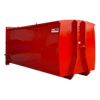
A transportable compactor integrates the compaction unit and the collection container into a single sealed structure — sometimes referred to in the industry as a self-contained design — with the entire unit collected and transported as one piece.
The design difference matters most when the waste stream includes wet or organic material. Because there is no joint between the compaction head and the container, wet waste is contained within the integrated unit, reducing leakage and hygiene risks during operation and transport. This sealed, integrated design can be well suited to food waste, wet refuse and organic streams where containment, leakage and hygiene are key considerations.
Transportable compactors are also practical for sites where the equipment may need to be relocated, or where a simple all-in-one collection method reduces operational complexity. Wastech's transportable range includes both auger-based models for wet and mixed streams, and blade-based designs for dry and bulky waste.
A detailed comparison of compactor types — covering decision criteria, typical applications, and configuration trade-offs — is covered separately once the types cluster article is available.
Compactors for Specific Applications
Beyond stationary and transportable configurations, some sites require equipment designed around a specific constraint — available footprint, a dual waste stream, or a material type that needs pre-processing before compaction.
-
Mini Compactor
For inner-city sites, laneways, and locations where standard collection vehicle access is impractical, Wastech's Mini Compactor provides a self-contained compaction and storage solution in a confined footprint.
The 5 m³ model handles paper, cardboard, general and organic waste using an auger mechanism. A SmartWeigh system logs each load by user swipe card — useful for sites where waste costs are tracked or split across tenants or business units. The 10 m³ model covers higher-volume applications in the same compact configuration.
Both units store compacted material internally and are collected whole when full, removing the need for external bins in laneway or high-foot-traffic environments where bin storage creates congestion or hygiene concerns.
-
Double Decker Compactor
Where a site generates two distinct waste streams and floor space is limited, the Double Decker Compactor stacks two independent compaction units vertically — handling both streams from a single footprint without requiring separate collection bays.
Each unit compacts independently, with a 12 m³ lower unit and a configurable upper unit ranging from 23 m³ to 35 m³ — matched to the relative volumes of each stream. Each container is programmed to signal collection only when full, removing unnecessary transport runs for part-loaded bins.
Typical applications include strata and mixed-use developments handling general waste and recyclables simultaneously, and commercial sites managing separate organic and dry waste streams where parallel installations aren't feasible.
-
Shark Compactor
Standard compactor chambers are sized and shaped for bagged or loose waste. Items such as furniture, mattresses, white goods, insulation batts, plastic chemical containers, and oversized boxes don't load into standard chambers easily — and attempting to force them through creates operational problems and equipment wear.
The Wastech Shark Compactor is designed to handle these bulky and irregular items. With a 5.0 m³ chamber, 50-tonne packing force, and throughput of up to 300 m³ per hour, it processes material that would otherwise require separate collection or manual handling. The Shark does not require civil works or saw tooth bays, which means it can be deployed without the site preparation typically associated with permanent installations. This makes it viable as a pop-up transfer station — deployed to manage bulky waste at a specific site or event, then relocated.
-
Timber Pallet Crusher
Sites receiving regular pallet deliveries — freight depots, distribution centres, and high-volume retail back-docks — face a compaction problem standard equipment cannot address directly: whole wooden pallets cannot be fed into a standard compactor chamber.
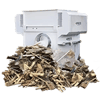
Wastech's Timber Pallet Crusher handles the pre-processing step. The unit reduces wooden and freight pallets to splinters using simultaneous break-up force, at throughput of up to 360 pallets per hour. The crushed material enters a connected 31 m³ bin, which reaches weights of over 6.5 tonnes — significantly denser than unprocessed pallet waste allows.
For sites managing large cardboard carton volumes separately, Wastech's PZZ Cardboard Crusher handles cardboard cartons and cardboard pallets as a distinct stream — a separate unit suited to cardboard rather than timber.
What Can a Compactor Machine Handle?
A wide range of solid, mixed and general commercial waste streams can be matched to an appropriate compactor configuration. Selection depends on the waste type, moisture content, density, volume, and how the waste is loaded and collected.
What compactors are generally not suited to:
Liquids and predominantly liquid waste require separate waste management. Hazardous or regulated waste streams needing specialist treatment, sharps, pressurised containers, and materials with explosion or puncture risk fall outside the scope of standard compactor operation. Where material is going to recycling, whether it can be compacted depends on its type, quality, how well it is segregated and what the recycler accepts.
Where a site's waste stream includes materials that fall outside the standard compaction model, a site assessment before equipment selection is the practical starting point.
How Compactor Machines Reduce Waste Collection Costs
Commercial and industrial operations generated 32.8 million tonnes of waste in Australia in 2020–21 — 43% of the country's total waste output according to the National Waste Report 2022 — and for most of these sites, collection frequency is the single largest variable in what waste management actually costs year to year.
The degree to which a compactor reduces waste volume varies by material, because composition, density, moisture content and compressibility all affect how much volume can be removed
The potential savings also depend on how waste collection is charged. Where charges are based on container lifts or transport, fewer collections can lower costs. Compaction reduces volume, not weight, so where disposal is charged by weight it won't lower that part of the bill. Mixed commercial waste falls somewhere between.
This matters operationally because the return on a compactor machine is directly connected to the reduction in collection frequency — and that reduction depends on the actual compaction ratio achieved with the site's specific waste, not a theoretical average. One of the most common specification errors seen in practice is sizing a container based on raw uncompacted waste volume rather than the compacted volume the material will actually achieve. A waste stream that compacts well at a given force may require a smaller container than expected. A stream with low compressibility, by contrast, can fill a container faster than anticipated — and lead to more frequent collection runs than the initial specification suggested.
Getting the compaction ratio estimate right for a specific waste stream, and matching it to the right container size and collection frequency, is where the economics of a compactor are actually determined — not in the headline specification of the unit.
Compactor vs Other Waste Solutions
Understanding whether a compactor machine is the right investment means understanding what it replaces — and what it doesn't.
-
Compactors vs Loose Bin Collection
The direct alternative to a compactor for most commercial sites is loose bin collection: wheelie bins or skip containers serviced on a fixed schedule. Loose bin collection is lower in upfront cost and works well for sites with irregular or low-volume waste generation. For these sites, the collection frequency is manageable and the economics don't support a capital investment in compaction.
For sites generating waste consistently across the week — particularly those where bins are being serviced more than twice weekly, or where partly-filled containers are being emptied simply because the schedule dictates it — the equation shifts. A compactor reduces the number of lifts required over a year. Multiplied by the cost per lift, the cumulative saving is what determines whether the equipment pays for itself and over what period.
The break-even analysis is usually simpler than it sounds: current annual collection cost versus projected cost after compaction-driven reduction in lift frequency, compared against equipment and ongoing service cost. For most mid-to-large commercial operations generating consistent daily waste, the case is clear. For smaller operations with weekly or fortnightly collection needs, it often isn't — and that's a legitimate outcome of the analysis.
-
Compactors vs Balers
Balers produce portable, tied bales suited to clean, dry recyclables — cardboard, plastic film, paper. The output can be sold to a recycler, making a baler the natural choice where the waste stream is predominantly clean and sortable. A compactor handles a broader range — general waste, mixed material, and food organics, but also dry recyclables where large-format models with recycling-rated bins can supply compressed material to mills like Visy or Opal. The savings case for a compactor combines collection frequency with potential rebate income — not from baled resale, but from compressed volume into a scaled container.
For a full side-by-side analysis:
Who Uses Compactor Machines?
Mid-to-large commercial and industrial operations form the primary market for waste compactor machines — the higher the daily volume and collection frequency, the stronger the business case.
Commercial and industrial operations form the core market for compactor machines within Australia's waste management and resource recovery sector. Compactors are used across a range of commercial and industrial environments, including:
- Retail — Supermarkets, shopping centres and specialty stores generate high volumes of cardboard packaging, plastic film, and general waste from daily stocking and returns. Shopping centres deal with consolidated waste from multiple tenants across a single loading dock, making high-throughput compaction particularly effective.
- Hospitality — restaurants, hotels, and venues managing food waste, packaging, and mixed recycling in constrained back-of-house areas with limited storage.
- Food processing — wet and organic waste generated at high daily volumes, requiring sealed containment and regular collection management.
- Strata and owners corporations — mixed residential waste in high-density buildings, where controlling on-site waste storage and collection frequency is a persistent management challenge.
- Health and aged care — multiple waste categories requiring strict segregation and handling, often across sites with regulated disposal obligations.
- Schools and universities — variable waste generation across high-traffic, multi-building campuses with limited centralised storage.
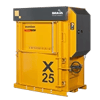
- Automotive and manufacturing — consistent volumes of general waste and recyclable materials from production operations.
- Logistics — Transport, freight, and 3PL operations generate packaging waste from inbound and outbound movements: cardboard, plastic film, and stretch wrap from palletised loads and returns handling accumulate quickly across receiving and dispatch areas.
- Distribution centres — High-volume receiving operations process large quantities of inbound packaging with every delivery run. Cardboard, plastic film, and stretch wrap build up fast at receiving docks, and the consistent daily volume typically justifies a high-throughput stationary compactor to reduce collection frequency.
- Waste management facilities — transfer stations and resource recovery operations using large-scale stationary units to process incoming loads at volume.
The right compactor configuration varies considerably between these environments. A food processing facility generating primarily wet organic waste has fundamentally different requirements from a retail distribution centre processing large volumes of cardboard. Industry category alone is not enough to choose the right equipment. Waste type, volume, site layout, loading requirements and collection arrangements all matter.
Compactor Machines and Workplace Safety
Commercial waste handling involves routine manual tasks — moving heavy bins, loading compactor chambers, managing wet containers.
Hazardous manual tasks are one of the most common causes of workplace injury in Australian commercial environments, and waste handling is a category where that risk is present daily across most industries.
Compactor machines can reduce some manual handling requirements by changing how waste is loaded, stored and transferred for collection. Equipment selection should also consider guarding, access controls, loading arrangements, isolation requirements and safe maintenance access. Built-in access controls, such as swipe-card systems on compact urban units, limit unsupervised use. Fill-level monitoring removes the need for manual bin checks.
For operations where waste handling is part of a work health and safety (WHS) risk profile — particularly food processing and hospitality — the operational design of a compactor is worth evaluating alongside the compaction specification. Loading height, access controls, and the elimination of manual bin-moving tasks are all part of the risk reduction case, not just the disposal cost case.
Why Purpose-Built Compaction Matters
For over 30 years, Wastech Engineering has designed, manufactured, and delivered compactor machines across Australia. Purpose-built equipment — sized for a specific waste stream, configured for a site's collection method, and backed by local service — typically performs more reliably and costs less to run over time than a repurposed or off-the-shelf unit.
For operations with sustainability reporting obligations or environmental performance targets, fewer collection runs carry an additional benefit. Every reduction in bin lifts means fewer vehicle movements on site — which can contribute to lower transport-related impacts associated with waste collection. For sites using Wastech's SmartWeigh system, the data generated through weighing and usage tracking can also provide a factual record of waste activity over time, supporting internal waste audits, cost allocation and environmental reporting.
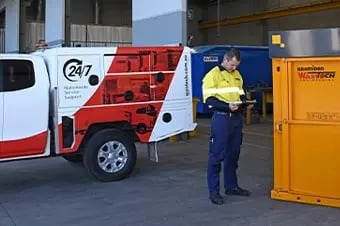
Wastech maintains national service coverage and 24/7 after-sales support across Australia, available 365 days a year.
How to Choose the Right Compactor Machine for Your Site
Selecting a compactor machine that actually performs as expected — and generates the ROI that justifies the investment — depends on getting several interconnected factors right before settling on a model.
- Waste stream composition — what material is being compacted, and how does it behave under compression? Different waste streams may require different configurations depending on their composition, density, moisture content and behaviour under compression. Sites with a mix of both may need separate units, or a transportable compactor that handles both without leakage risk. Getting this wrong is the most common source of performance problems after installation.
- Daily and weekly volume — how much waste is generated, and how consistently? Volume and generation patterns help determine the required compactor capacity, container size and collection frequency, alongside the waste characteristics and site requirements. Low-volume or highly seasonal sites may not reach the collection frequency where a compactor generates a meaningful saving over loose bin collection.
- Site configuration and installation requirements — available space, clearance, loading access, collection vehicle access and maintenance access all need to be considered when selecting a compactor. The installation requirements will also depend on the type of compactor and the site's existing infrastructure. Power supply should be confirmed early to ensure the selected equipment is suitable for the site.
- Container sizing and collection compatibility — the receiver container should be sized according to the expected compacted volume of the waste and the required collection frequency. The container must also be compatible with the collection vehicle and handling system used by the waste contractor.
- Total cost of ownership — compactor machines are industrial equipment designed for long operating lives when properly maintained, but they do require scheduled servicing and parts replacement over time. Looking at the total cost of ownership over a 10-year horizon — factoring in servicing, parts, and potential refurbishment — gives a more accurate picture of the real investment than the purchase price alone.
- Service and maintenance access — an unplanned breakdown that takes a compactor offline affects site operations in ways a loose bin arrangement wouldn't. How quickly a service provider can respond, and whether parts are locally available, matters in practice. For sites in regional areas or those with tight operational windows, service response time is worth treating as a selection criterion alongside the equipment specification — not as a secondary consideration.
Wastech's Compactor Range
Wastech Engineering has designed and manufactured compactor machines in Australia for over 30 years. The range spans transportable and stationary configurations for standard commercial and industrial applications, alongside purpose-built units for specific requirements — from confined urban sites and dual waste streams through to bulky waste processing and timber pallet pre-crushing — with models covering compact commercial installations through to large-scale transfer station equipment.
Wastech's compactor range includes configurations designed for different waste streams, volumes and site requirements. Wastech's SmartWeigh system is available as a weighing and waste tracking solution, providing weight measurement, usage tracking and user-based cost allocation. National service coverage operates 24/7 across Australia, 365 days a year.
Full specifications, container compatibility, and configuration options are detailed on Wastech's compactor product pages.
Choosing the right compactor machine starts with the waste stream and the collection economics — not the product catalogue. For most commercial sites, the right configuration becomes clear once you understand what's being generated, how often it needs to move, and what the current collection arrangement is costing.
Wastech's team works with businesses across Australia to work through that process and recommend the right equipment for each site's specific requirements.
Ready to work out the right configuration for your site?
Book a Free Site Assessment or Contact the Wastech team: 1800 465 465

AUTHOR
Greg Scott


Greg Scott is the Business Development Manager at Wastech Engineering, with over 30 years of experience in waste management, environmental services, and commercial operations across Australia. He works with industrial and commercial clients across Victoria and Queensland, delivering the right waste management solution to reduce waste handling costs, improve site throughput, and support sustainability targets.