

Automotive & Manufacturing



A baler machine for retail is a vertical baler that compresses cardboard and packaging waste into dense, manageable bales in the back-of-store or goods-inwards area. Baling can reduce waste volume by up to 90%, which can mean fewer bins, fewer collections and less manual flattening. For national retailers and supermarkets handling high cardboard volumes across many sites, a baler can return staff time and back-of-store space and lower collection costs. This guide covers what that looks like in practice, and how to choose and manage balers across your sites.
To see how a baler works, read our guide to how baler machines work.
Why Balers Matter for National Retailers
National retailers generate a constant stream of cardboard and packaging, and every site has to handle it inside a working store. Wastech supplies balers to national retail customers, and the operational benefits below reflect that experience.
The volumes involved are substantial. About 4.9 million tonnes of paper and cardboard were generated in Australia in 2024–25, most of it from commercial and industrial premises, according to the Department of Climate Change, Energy, the Environment and Water (DCCEEW).
Key Benefits of a Baler in Retail
- Labour efficiency. This is the primary operational benefit of a baler. A baler can reduce the need to manually flatten cardboard, so team members can spend more time on customer service, replenishment and other revenue-generating activities instead of waste handling.
- Less exposure to box cutter incidents. Flattening boxes can involve a box cutter, so less flattening means less time spent using one. Cutting tools remain a recognised workplace hazard, and WorkSafe Queensland publishes guidance on the safe use of knives at work.
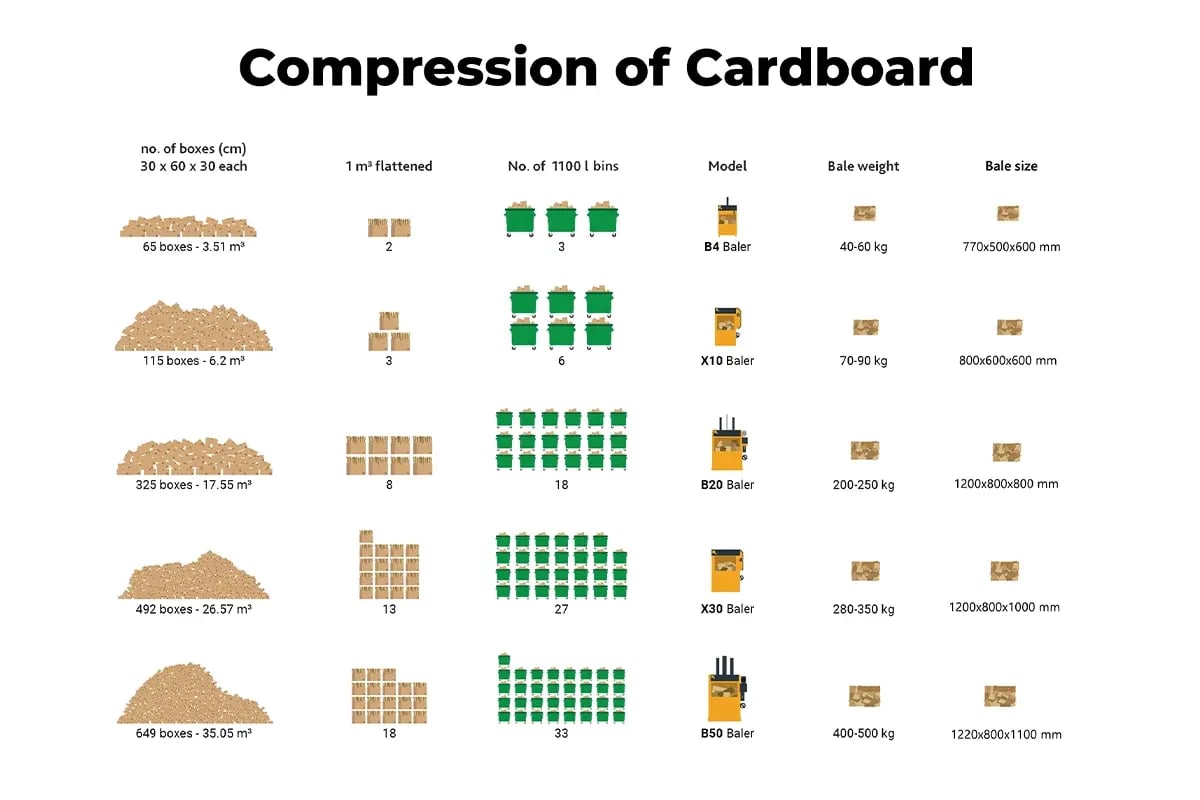
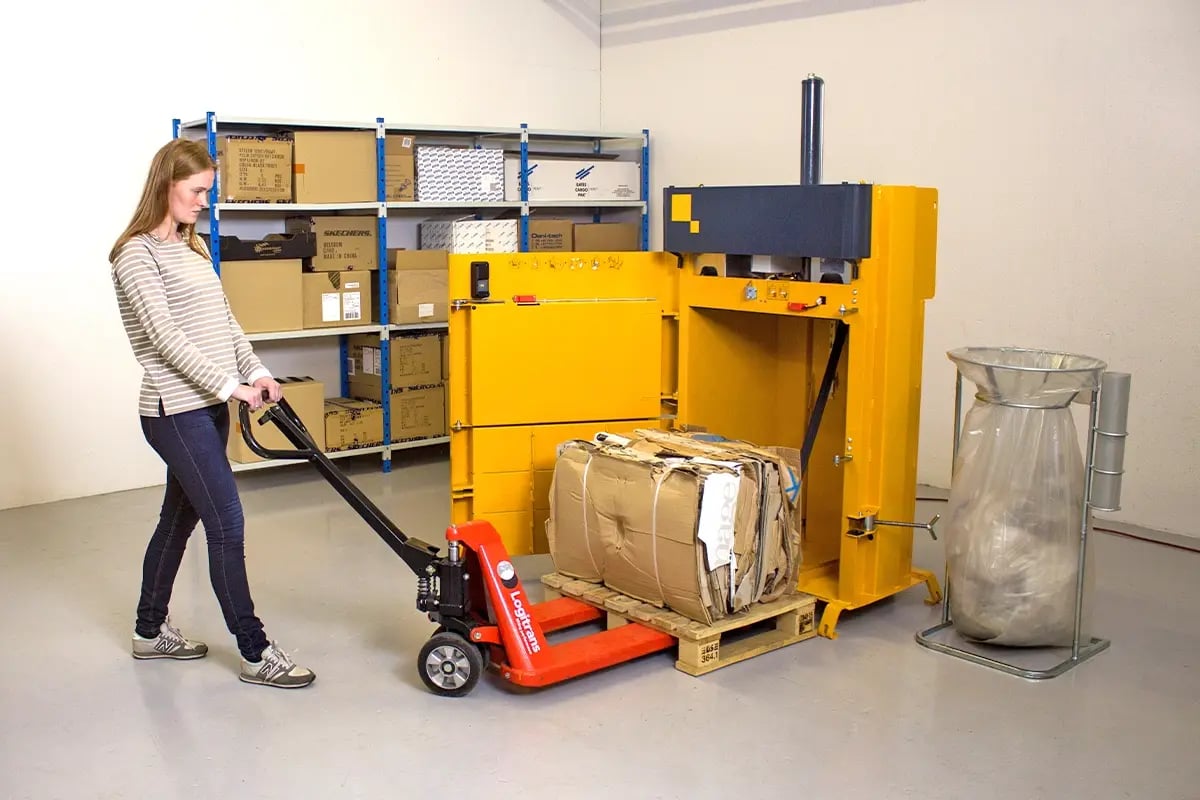
- More usable back-of-store space. Compacting large volumes of cardboard into dense bales reduces the number of waste bins a site needs. As a guide, Wastech's cardboard compression chart compares loose and baled cardboard. Loose cardboard from 65 boxes fills three 1100 L bins, but baled it becomes one 40–60 kg Baler B4 bale. Loose cardboard from 325 boxes fills 18 bins, against one 200–250 kg Baler B20 bale.
- Fewer bins can improve stock flow, create more usable storage and operational space, and reduce the clutter and trip hazards that make goods-inwards areas less safe.
- Lower collection costs and easier recycling. A baler can lower waste collection costs. Clean, recyclable cardboard bales are easy to transport and process, which supports cardboard recycling and sustainability initiatives.
What Happens When a Retail Baler Goes Down?
Some retail businesses simply struggle to operate without a baler. Some national retail customers find day-to-day operations difficult when a baler breaks down, and at some stores the cardboard volume is high enough that two balers are used to handle the flow.
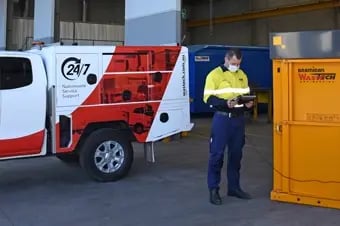
For multi-site operators, baler uptime is part of the selection decision, not an afterthought. Wastech provides nationwide 24/7 breakdown support and preventative maintenance programs designed to reduce failures. For a breakdown, Wastech's target is to attend the site within 4 hours.
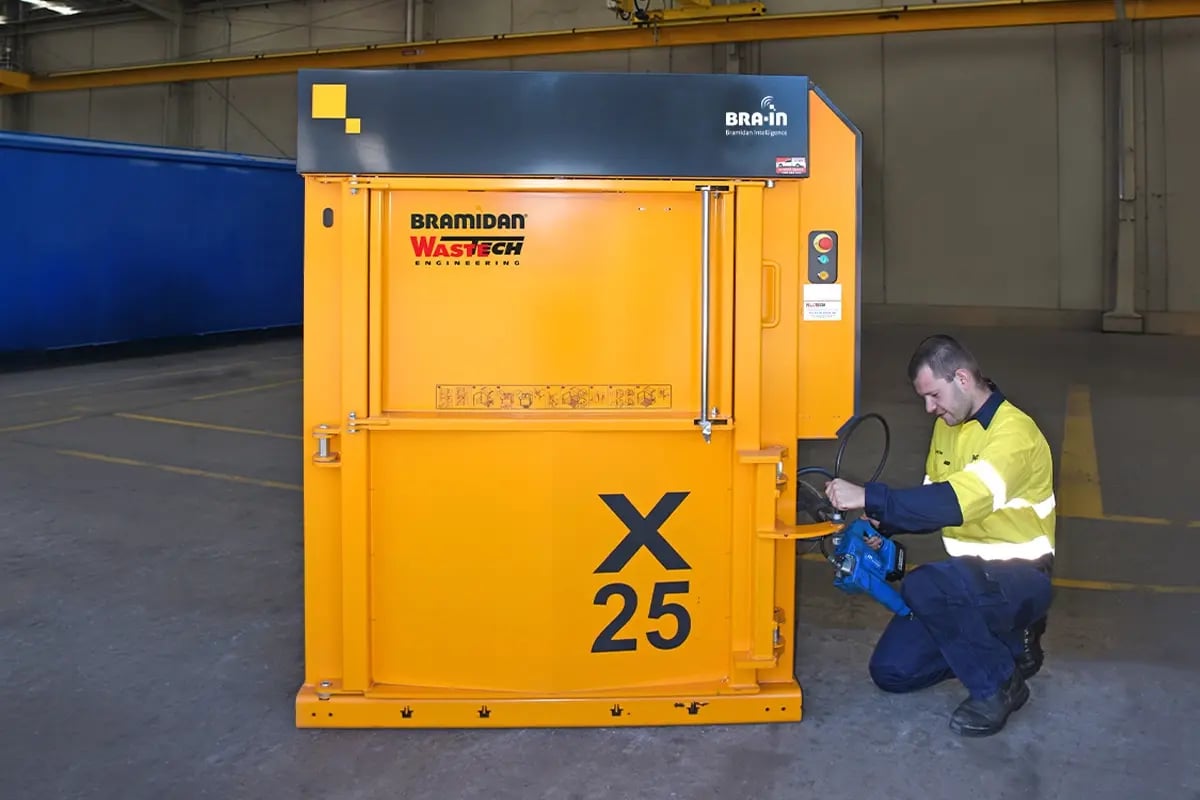
Wastech's optional BRA-IN monitoring system, where fitted, sends real-time alerts about machine errors. If a site's cardboard flow depends on a single machine, it is worth discussing service cover before the baler is installed.
How to Choose the Right Baler for Your Retail Sites
When choosing balers for retail stores, Wastech assesses each site's operational requirements so the equipment is fit for purpose. For retail sites, these factors usually decide the choice.
-
Cardboard Volume
Cardboard volume is a primary factor. Higher-volume locations may need larger or more automated equipment to process material efficiently and stop waste accumulating. Size for the busiest weeks, such as seasonal trading peaks and large deliveries, not just the average week.
-
Space and Layout
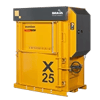
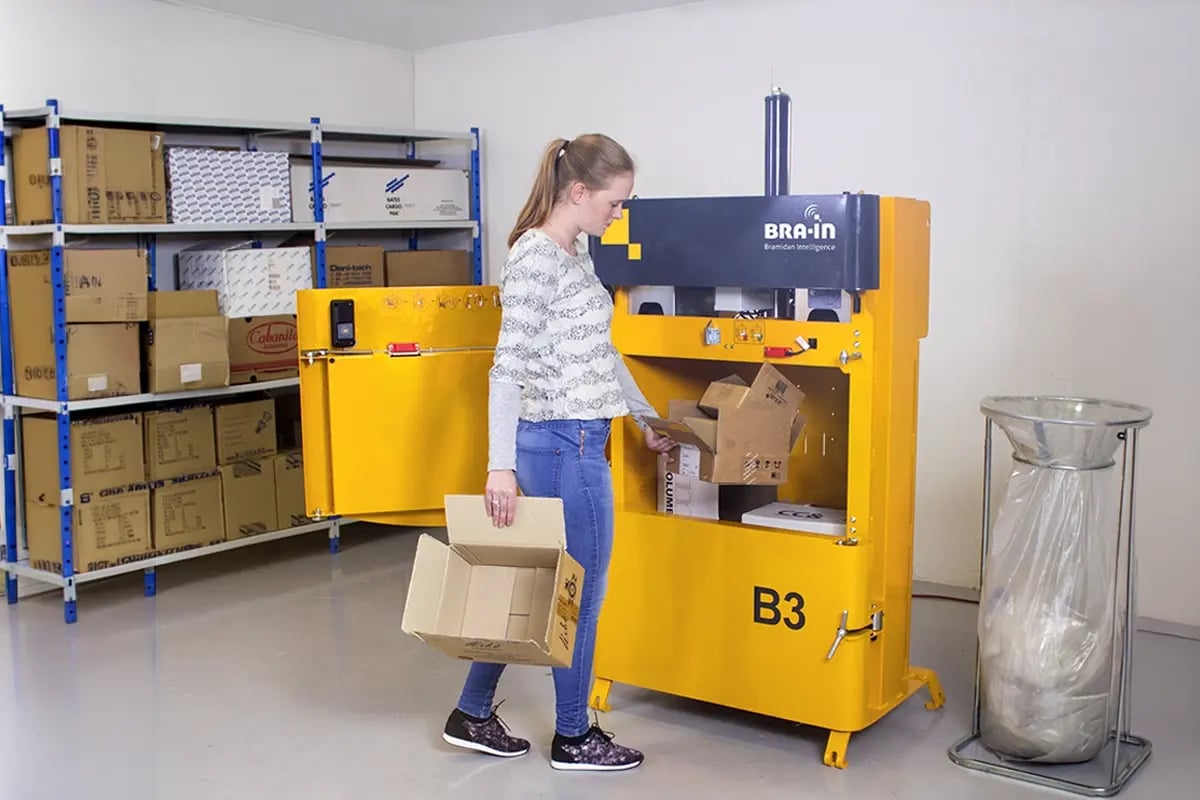
Available back-of-store space is another critical consideration. The baler should suit the site layout and storage capacity, including floor area and ceiling height. The Baler B3 and B4 suit smaller back-of-store spaces, with a small base area (0.67 m² on the B3) and low overall height, and the Baler B4 is front operated for installation in narrow spaces.
-
Collection Frequency and Bale Size
The baler should also align with the collection frequency the site wants. By optimising bale size and storage requirements, retailers can reduce collections, improve site efficiency and make better use of space. Cardboard bale weights range from 30–50 kg on the Baler B3 to 200–300 kg on the Baler X25.
The Baler B3 comes with a hand cart for removing finished bales. Before choosing a machine, confirm with the collection contractor which bale sizes and weights they accept.
-
Box Size and Feed Opening
The feed opening sets how large a box can go in whole, without being cut or folded first. The Baler B3 and B4 have a 770 x 460 mm feed opening, the Baler X25 has 1090 x 530 mm and the Baler B20 has 1200 x 480 mm. The Baler B5W has a 1 metre wide filling opening, so the largest boxes can go in without being broken down. For very large boxes, the Baler B30W has an extra wide chamber of more than 1.5 metres.
-
Materials
The Baler B3, B4, B5W and B20 handle cardboard, plastic film and paper. The Baler X25 accepts a wider range of materials.
-
Power and Installation
The Baler B3, B4 and B5W run on single-phase power, which makes installation easier in a wide variety of environments. The Baler B20 and X25 need a three-phase supply, so power availability is worth confirming early.
Retail-relevant models at a glance
| Model | Category | Cardboard bale weight | Power | Feed opening W x H (mm) | Dimensions W x D x H (mm) | Noise level |
|---|---|---|---|---|---|---|
| Baler B3 | Small | 30–50 kg | Single-phase | 770 x 460 | 940 x 715 x 1985 | 60–65 dB |
| Baler B4 | Small | 40–60 kg | Single-phase | 770 x 460 | 940 x 715 x 1985 | 60–65 dB |
| Baler B5W | Small | 80–110 kg | Single-phase | Single-phase | 1360 x 895 x 2370 | 65–68 dB |
| Baler B20 | Medium | 200–250 kg | 200–250 kg | 1200 x 480 | 1775 x 1030 x 2790 | 62–64 dB |
| Baler X25 | Medium | 200–300 kg | Three-phase | Three-phase | 1775 x 1255 x 1995 | 1775 x 1255 x 1995 |
Each model above has a full-bale light, and all except the Baler B3 eject finished bales automatically. The full comparison of baler sizes, materials and automation levels is in our guide to types of baler machines.
Managing Balers Across a National Retail Network
Choosing a baler for one store is a different task from choosing balers for a national network. Sites differ in how much cardboard they handle, how often it arrives and how much room they have, so one machine rarely suits every location.
Group sites by what they need. Sort stores by cardboard volume, store format and available space. Comparable sites can share one specification, which keeps training and service simpler. Sites that do not fit a group, such as a high-volume store or one with very limited space, are better assessed individually.
Start with a pilot site. Trialling a specification at a representative store lets a retailer confirm it works before extending it to similar sites.
Keep operations consistent. Using the same loading and bale-handling routine at comparable sites makes it easier to train new team members and to see which site is falling behind.
Monitor the network. For multi-site operators, BRA-IN monitoring gives a clearer view of every baler. The web portal and app show each machine's operational status and performance data, such as the number of bales produced and service status. Balers can also be linked, with an alert when a preset number of bales is ready, which supports pick-up planning.
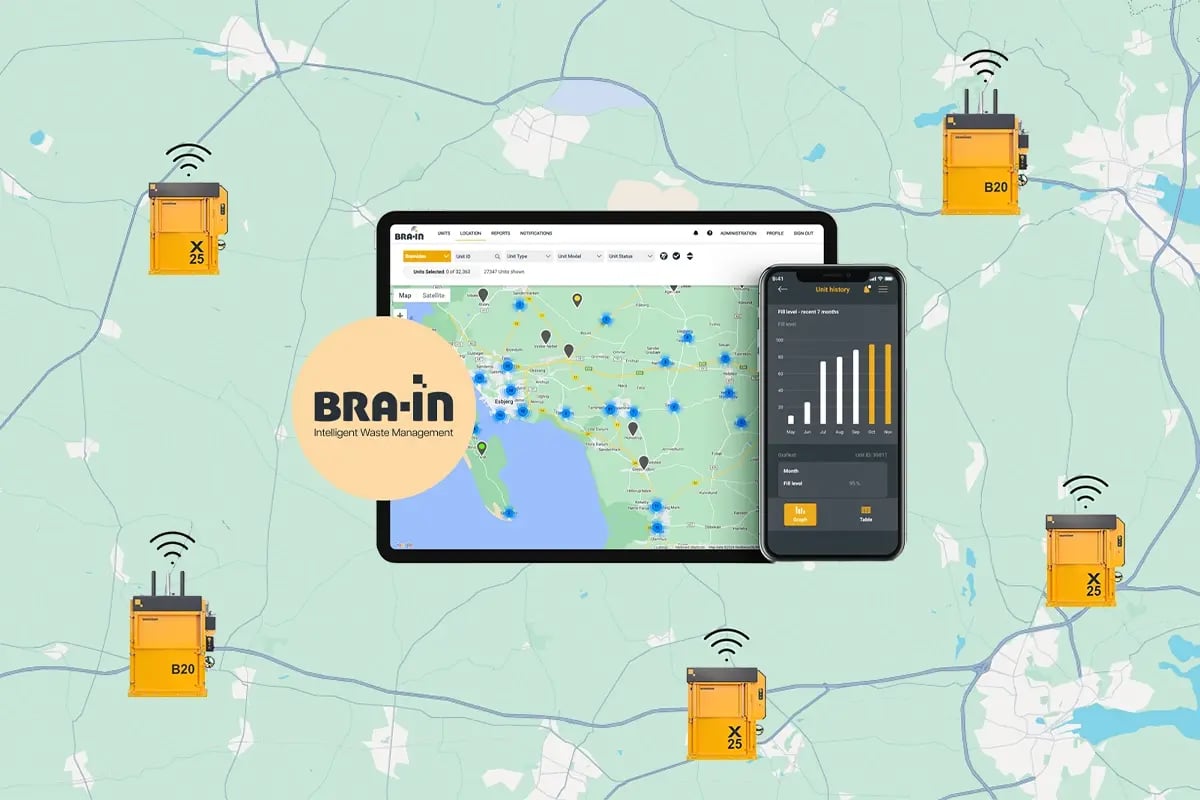
Comparing bale numbers and collection frequency across similar sites can show where a different machine or collection schedule may be needed.
Baler Machines Beyond Retail
The same selection factors apply outside retail. Wholesale and distribution centres and logistics and warehousing sites generate high volumes of cardboard packaging, and a baler works the same way there. Manufacturing facilities are in the same position.
Baler Machines Beyond Retail
Start with the three factors that decide the choice at your busiest site: cardboard volume, available back-of-store space and the collection frequency you want. Once those are clear, contact our technical team and we can help match a baler to each site. Wastech's wider range for the sector is on our retail industry page.

AUTHOR
Andrew May


Andrew May is the National Business Development Manager at Wastech Engineering, with over 14 years of experience working with customers to find the right solutions for their operations. He partners closely with clients to uncover opportunities, understand their operational goals and align them with commercial needs, delivering tailored solutions that support long-term customer success.