


Automotive & Manufacturing




A chute system is a vertical pipe or shaft built into a multi-storey building that lets waste, recycling, or linen be dropped in at each floor and carried down to a collection point, compactor, or bin room at the base. Getting the configuration right is one of the most important waste management decisions a building owner, developer, or facilities manager will make — done well, residents get a clean, quiet, efficient way to dispose of waste for decades; done poorly, it means noise complaints, blocked chutes, and costly retrofits.
This guide breaks down the main types of chutes used in residential towers, hotels, hospitals, and commercial buildings, the difference between single and dual chute layouts, and the materials chute systems are built from, so you can work out which configuration is right for your project.
Whether you're designing a new residential tower, healthcare facility, hotel or commercial development, selecting the right chute system early can improve operational efficiency, reduce maintenance issues and support long-term waste management outcomes. Wastech Engineering works with developers, consultants, architects and project teams to help specify chute systems that meet each project's operational and compliance requirements.
How a Chute System Works
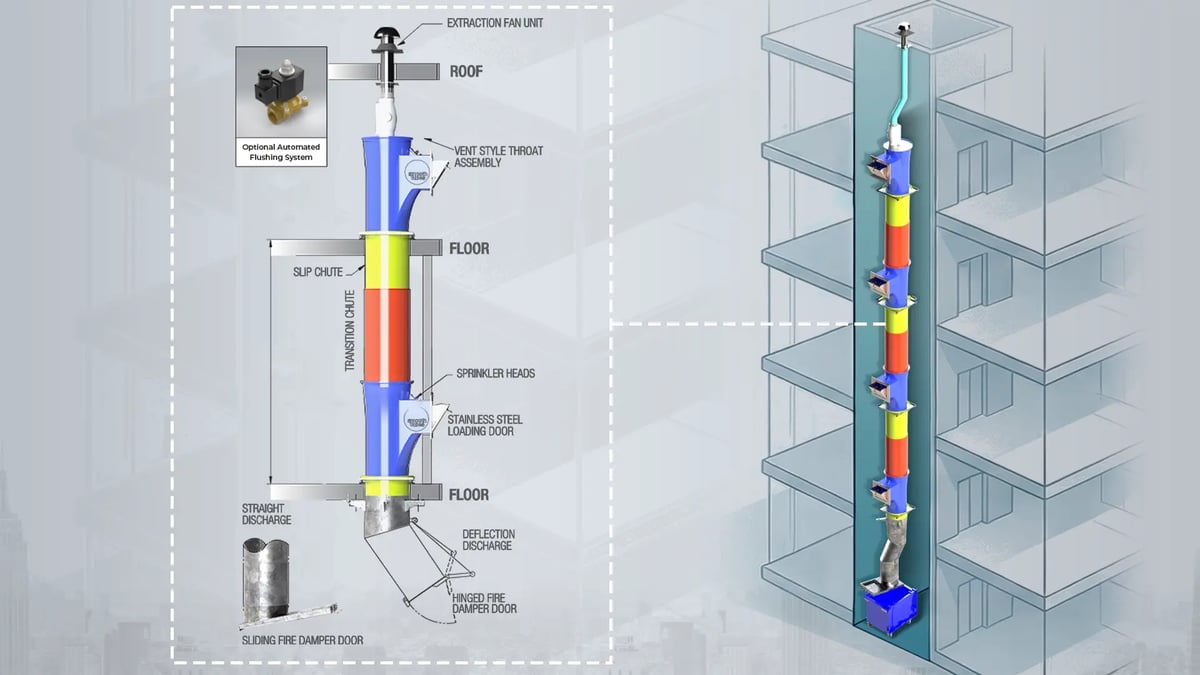
Chute systems are standard in high-rise apartments, hotels, hospitals, and other multi-storey developments where carrying waste down via stairs or lifts isn't practical. Modern chute systems are engineered with fire-rated doors, acoustic features to reduce noise, and smooth internal surfaces that resist blockages, odour, and bacteria build-up — a major improvement on older steel or cement chute designs.
Types of Chutes by Application Stream




Not all waste is the same, and different buildings need different combinations of chutes depending on what streams they need to separate. Here are the main types of chutes used across buildings:
- General Waste Chutes
The most common type of chute, used for standard household or commercial rubbish. General waste chutes are typically the busiest chute in a building, so they need to be built to handle high daily volumes, day after day, without blocking, corroding, or generating excessive noise.
Because this chute carries the highest volume and widest mix of waste, a few design factors matter more here than anywhere else in the system:
- Loading throat doors should be self-closing and fire-rated, with fire protection measures provided in accordance with the applicable building codes, project specifications and fire engineering requirements.
- Internal surface finish determines how well the chute resists sticking, odour, and bacteria build-up. A smooth, non-porous lining (rather than a welded steel or cement finish) is far easier to keep clean over the life of the building.
- Noise suppression is a common complaint in residential towers with a general waste chute running past bedrooms; acoustic isolation at each level and a moulded (rather than angled) entry point both help reduce impact noise.
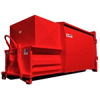
- Compaction is frequently paired with a general waste chute at the base of the building since it's the stream with the highest volume and benefits most from reduced storage and collection costs, for example, using an S-250 chute compactor at the discharge point.
Given how heavily this chute is used, it's usually the first stream a building designs around, with other streams (linen, recycling, and organics) added depending on the building type and waste strategy.
- Linen Chute Systems
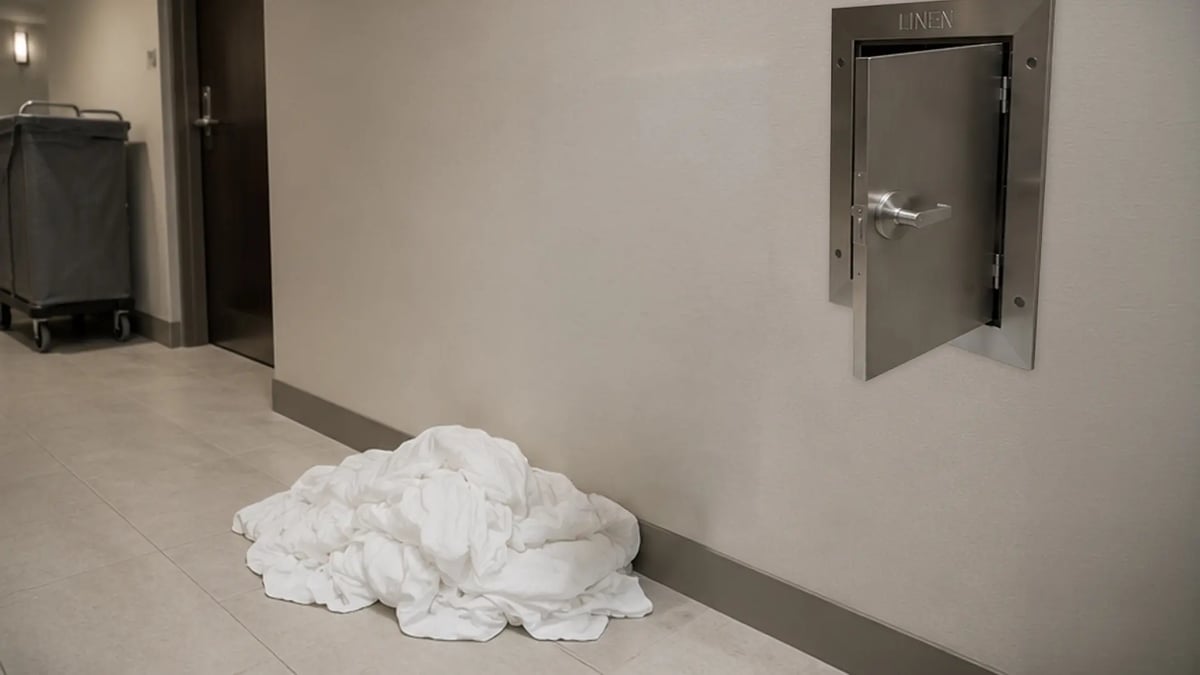
Linen chutes are common in hotels, hospitals, and aged care facilities, where soiled linen needs to travel from upper floors down to a laundry or collection area, often dozens of times a day across housekeeping and nursing shifts.
Linen brings a different set of demands to a chute system than rubbish does:
- Surface finish is critical. Any burrs, welds, or rough joins in the chute wall can snag, tear, or damage linen as it moves through the building, an expensive problem when it's happening to hotel-grade sheets and towels on a daily basis. A smooth, seamless internal surface is the main design priority for a linen chute.
- Frequency of use is much higher than a typical waste chute in hospitality and healthcare settings, so doors need to be built for repeated daily use without the latch, seal, or closing mechanism wearing out.
- Security matters. Linen chute doors are typically key-locked, both to control access to the chute and to prevent misuse of the opening.
- Noise control is especially important where linen chutes run near guest rooms or patient areas; a quiet-operating door and an acoustically isolated chute run help avoid disturbing guests or residents at all hours of the day and night.
- Hygiene is a related but separate concern to waste; soiled linen still needs a self-cleaning, non-porous chute surface to prevent bacteria and odour building up over time, particularly in a healthcare environment.
Because linen has such different handling requirements to rubbish, it's almost always run through its own dedicated chute rather than shared with a general waste or recycling stream. Wastech's Smoothtubes™ plastic chutes are built with this smooth, seamless internal surface in mind and are suited to both linen and general waste use.
- Organics (FOGO) Chutes
FOGO (Food Organics, Garden Organics) separates food and organic waste from general rubbish, supporting composting and diverting organic material away from landfill. As FOGO collection services continue to expand across Australia, many new developments are being designed with a dedicated organics stream from the outset to support current and future waste management requirements.
Organics behave differently to general rubbish inside a chute, which changes what the system needs to handle well:
- Moisture and odour are constant issues with food waste, so a non-porous, self-cleaning internal surface is especially important here; a chute that lets liquid or food particles cling to the walls will quickly develop odour and attract pests.
- Bacteria growth is a bigger risk with organics than with dry general waste, making crevice-free internal joins (rather than welded seams) a priority for hygiene.
- Collection frequency for organics is usually higher than for general waste, since food scraps can't sit in a bin room for as long without becoming a problem; this affects how the chute is paired with bins or compaction at the base of the building.
- Contamination control matters at the point of disposal, since FOGO streams only work if residents are actually depositing organic waste (and not general rubbish) into the correct opening, something to consider in how chute openings are labelled and positioned on each floor.
Because FOGO requirements and collection arrangements vary by council and by state, the right organics chute configuration for a building is best confirmed against your local waste strategy and collection contractor before finalising the design.
- Recycling Chutes
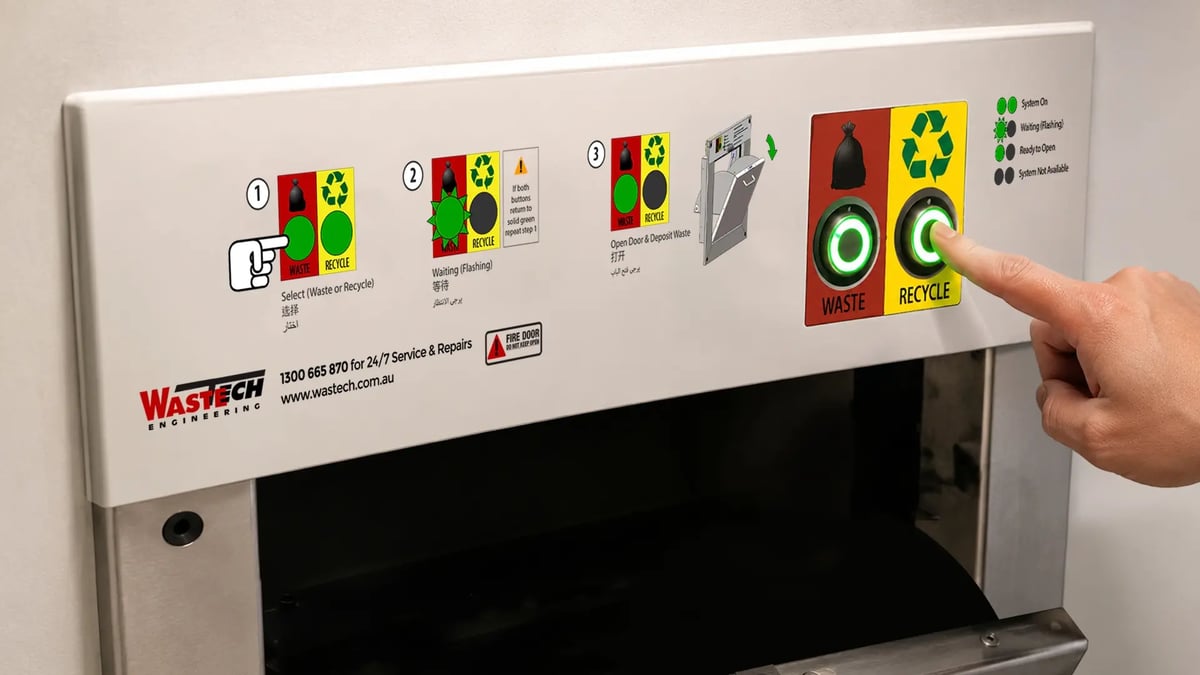
Recycling chutes handle paper, cardboard, plastics, and other recyclable materials, keeping them separate from general waste so they can be processed correctly rather than ending up in landfill.
A few things shape how a recycling chute is designed and used:
- Dedicated chute vs diverter. Recycling can be run as a fully separate, dedicated chute alongside general waste or managed through a diverter system that lets a single chute serve both streams; residents select general waste or recycling at the door, and the diverter routes material to the correct bin or compactor at the base (more on this in the single vs dual chute section below).
- Contamination is the biggest practical challenge. A recycling chute is only as good as what residents actually put into it; general rubbish, food waste, or soiled packaging placed into a recycling chute can contaminate an entire load and send it to landfill anyway. Clear signage at each door and, where used, diverter selection at the point of disposal both help reduce this.
- Volume varies by building type. Recycling volumes are usually lower than general waste but higher than organics, which affects how often the recycling stream needs to be collected relative to other chutes in the same building.
- Compaction is often applied to recycling in the same way as general waste, particularly cardboard and paper, to reduce the volume held in the bin room between collections.
Recycling is one of the more common streams to be run through a diverter rather than a dedicated chute since it lets a building meet separation requirements without needing the floor space for a second full-height chute run. Wastech's Smoothtubes™ Diverter is designed for exactly this scenario, allowing waste and recycling to be selected and routed through a single chute.
- Glass Chutes
Glass is heavier, harder, and more prone to breakage and noise than other waste streams, which is why a dedicated glass chute isn't standard in every building. Breaking glass inside a chute also creates a housekeeping issue at the collection point, and the impact noise of glass dropping through a chute is more noticeable to residents than softer waste streams.
For these reasons, glass chutes are typically only included where a building's waste strategy specifically calls for separated glass collection, for example, hospitality venues or mixed-use sites with high glass bottle volumes. This is assessed and configured on a case-by-case, needs basis rather than included as a default part of a chute system, so it's worth raising early with your chute system provider if glass separation is a requirement for your site.
Single vs Dual Chute System: What's the Difference?
One of the biggest decisions when designing a chute system is whether to install a single chute system or a dual chute system or more.
A single chute system uses one vertical chute to handle waste disposal. To separate multiple waste streams, such as general waste and recycling through a single chute, a dual, triple or diverter chute system can be installed. A diverter sits at the top of the chute and directs material into different bins or compactors at the base, based on which stream the resident selects at the door. This saves valuable building space, since only one chute run needs to be built into the structure, and it simplifies the resident experience as there's only one chute opening to use on each floor.
A dual and triple-chute system installs two or three separate, physically distinct chutes, for example, one for general waste and one for recycling, or one for waste and one for linen. Each chute runs independently from top to bottom of the building.
Which Is Best for Apartments?
The right choice comes down to available space, the number of waste streams the building needs to manage, and budget. A single chute system with a diverter is often preferred where floor space is limited, since it reduces the building footprint needed for chute risers while still allowing waste and recycling, or other streams, to be separated at the point of disposal. A dual chute system may suit larger developments with higher waste volumes, where running two independent chutes reduces congestion and allows each stream to be collected and processed on its own schedule. This is a design decision best worked through with a chute system specialist who can assess your building's floor plan, waste volumes, and the number of streams you need to separate. For a closer look at how single, dual, triple and diverter layouts compare in real projects, see our guide to chute layouts for waste systems.
Can One Chute Handle Both Waste and Linen?
A single chute is generally dedicated to either waste-related streams (general waste, recycling, organics) or linen, rather than combining waste and linen through the same chute. Linen has different handling requirements; it needs an especially smooth, tear-resistant surface, so linen is typically run through its own dedicated chute even in buildings that use a diverter for other waste streams.
Chute System Materials: What Are Chute Systems Made From?
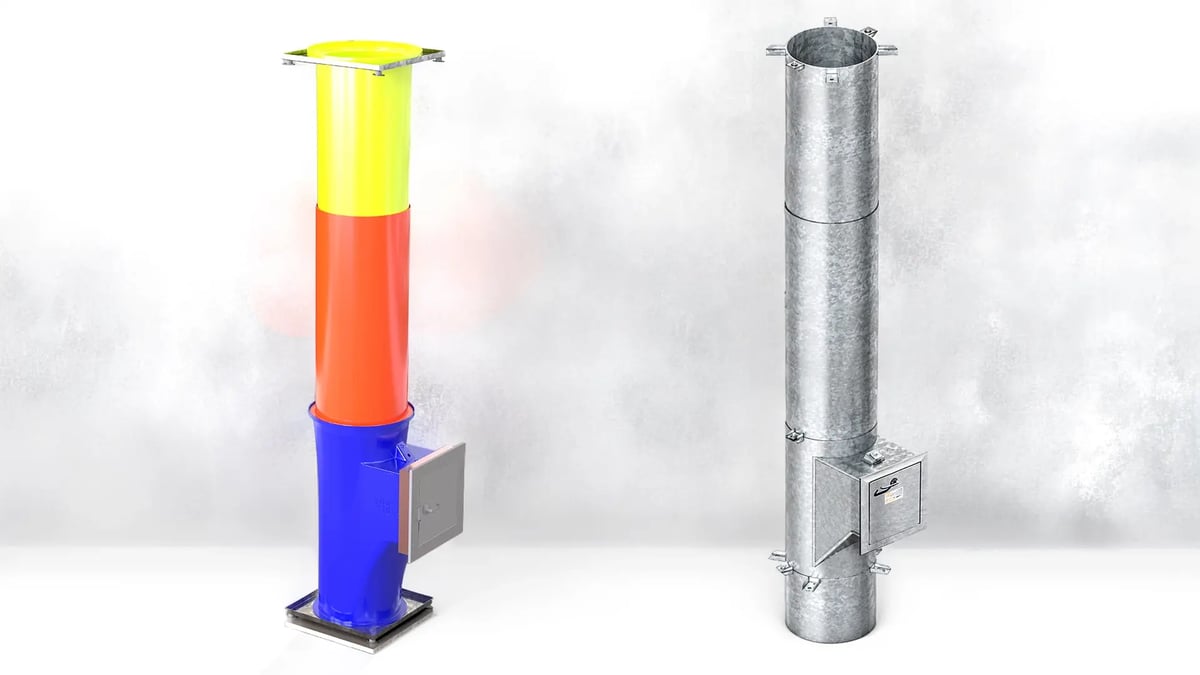
Chute systems have traditionally been built from steel or cement, but these materials come with drawbacks; they’re noisy, prone to corrosion, and can develop welds, burrs, or seams that harbour bacteria and cause blockages over time.
Modern chute systems, such as the Wastech Smoothtubes™ plastic chutes, are manufactured from industrial-grade LLDPE (Linear Low-Density Polyethylene), featuring a smooth, closed-cell, non-porous internal surface. This finish has less friction than steel, resists odour, bacteria, and blockages, and is corrosion-proof, all of which contribute to a quieter and cleaner chute over the building's lifetime.
That said, steel still plays an important role in a chute system:
- Stainless steel (304 grade) is used for loading throat doors, given its durability, fire resistance, and hygienic, easy-to-clean finish. Linen chute doors are also stainless steel and key-locked.
- Galvanised steel is used in components like the ventilation fan and discharge cowl and in the fire-activated deflector at the base of the chute, where corrosion resistance and strength are priorities.
So a well-engineered chute system typically combines a plastic (LLDPE) chute tube with stainless steel and galvanised steel components at key points, rather than relying on a single material throughout.
How Many Chute System Configurations Are There?
There's no single fixed number, since chute system configurations are built around each building's waste strategy. But the main building blocks are:
- Single chute - one chute, one waste stream
- Single chute with diverter - one chute, multiple streams selected at the door
- Dual or multi-chute - two or more independent chutes, each dedicated to a stream (e.g. waste and linen, or waste and recycling)
- Chute plus compactor - any of the above paired with a chute compactor, such as the S-250 or EcoPack chute compactor, at the base to reduce volume and collection frequency
From these building blocks, a chute system can be tailored to a building's specific mix of general waste, linen, organics, recycling, and where required, glass.
Do All Chute Systems Need a Diverter?
No. A diverter is only needed where a single chute is being used to serve more than one waste stream. If a building is installing separate, dedicated chutes for each stream, a dual or triple-chute system, a diverter isn't required, since each chute already handles only one type of waste. Diverters become valuable specifically when building space is limited, and a single chute run needs to do the work of managing multiple streams.
Choosing the Right Chute System for Your Building
Choosing the right combination of chutes, materials and configuration depends on your building type, waste volumes and the waste stream you need to separate, whether that's general waste, linen, organics, recycling or, where required, glass.
Wastech Engineering designs and manufactures Smoothtubes™ plastic chute systems and Smarttubes™ diverter systems for residential towers, hotels, hospitals and commercial developments across Australia and New Zealand, supporting project teams from early design advice through to technical support and delivery.
If you're at the design stage, our guide to designing chute systems that perform covers layout planning, wear-point reinforcement and long-term serviceability in more depth. Explore our range of chute systems or contact the Wastech Engineering team to discuss the right solution for your project.
Frequently Asked Questions
Does a chute system need regular maintenance?
Yes. Loading doors, seals, and diverter mechanisms are moving parts that benefit from routine inspection to prevent blockages, odour, and wear over time. Wastech provides ongoing planned maintenance and breakdown response for chute systems across Australia.
Can bulky or oversized waste go down a chute?
No. Wastech's chute systems have a nominal internal diameter of 530mm for garbage, sized for standard bagged household or commercial waste rather than bulky items like furniture or appliances. Buildings typically need a separate bulky waste collection arrangement alongside the chute system.
Are chute systems required to meet fire safety standards?
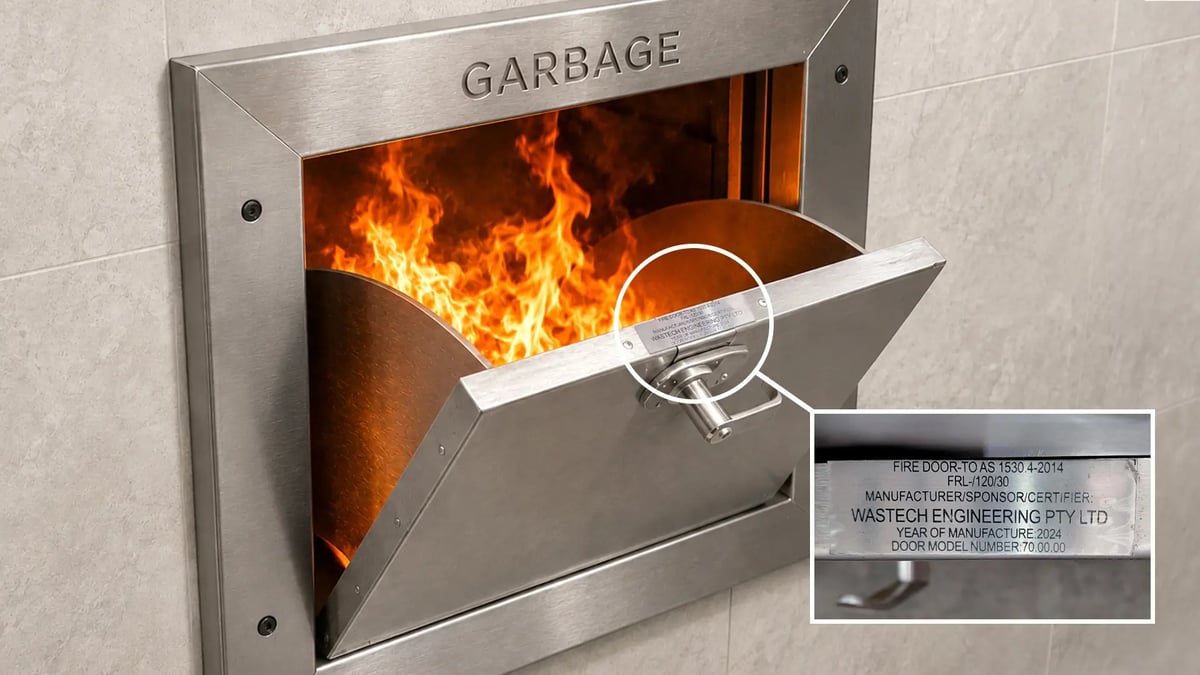
Yes. Loading doors are typically fire-rated stainless steel with a fire block core, tested and compliant with Australian Standard AS1530.4, and fire sprinklers are fitted at each loading throat ready for connection to building fire services.

AUTHOR
Prashneel Sharma


Prashneel Sharma is the Chutes Operations Manager at Wastech Engineering, leading the delivery of waste and laundry chute systems across high-rise, healthcare, aged-care and commercial developments. With a background in mechatronics engineering and mechanical design, he oversees the complete project lifecycle, from design coordination and procurement through to installation, commissioning and handover to delivering practical, compliant solutions that reduce project risk and improve operational performance.